

 English
 简体中文
简体中文
Grounding Rods Are the Foundation of Every Safe Electrical System
A grounding rod — also called an earth rod or ground electrode — is a metal conductor driven into the soil to create a direct electrical connection between a structure's electrical system and the earth. Every residential, commercial, and industrial electrical installation requires at least one grounding rod to meet modern safety codes, and the National Electrical Code (NEC) in the United States mandates a minimum of two ground rods spaced at least 6 feet apart unless a single rod tests at or below 25 ohms resistance.
Their purpose is straightforward but critical: grounding rods provide a low-resistance path for fault currents and lightning-induced surges to safely dissipate into the earth, protecting equipment, structures, and human life. Without a properly installed and tested grounding system, a single electrical fault can result in fires, equipment destruction, or fatal electrocution. This article covers everything you need to know about selecting, installing, testing, and maintaining grounding rods — from material choices to code compliance and real-world resistance targets.
What a Grounding Rod Actually Does — and Why Resistance Matters
Grounding rods work by exploiting the earth's virtually unlimited capacity to absorb electrical charge. When a fault occurs — say, a live wire contacts a metal appliance casing — current flows through the grounding conductor, down the grounding rod, and disperses radially through the surrounding soil. This triggers the circuit breaker or fuse to open, cutting power before anyone can be harmed.
The effectiveness of this process depends almost entirely on the resistance between the grounding rod and the surrounding earth — called ground resistance or earth resistance. The NEC recommends a ground resistance of 25 ohms or less for a single rod, though many telecommunications standards, data centers, and sensitive equipment manufacturers require 5 ohms or even 1 ohm to prevent signal interference and equipment damage from transient voltages.
Ground resistance is not fixed — it varies with soil moisture content, temperature, soil composition, and seasonal changes. Sandy, dry soils can exhibit resistances 10 to 50 times higher than moist clay soils. A grounding rod that passes a 25-ohm test in spring may exceed that threshold during a dry summer, which is why periodic testing matters.
Types of Grounding Rods: Materials and Their Performance Differences
Not all grounding rods are created equal. Material choice directly affects corrosion resistance, conductivity, longevity, and installed cost. The three most common types used in modern installations are copper-bonded steel, solid copper, and galvanized steel.
Copper-Bonded Steel Rods
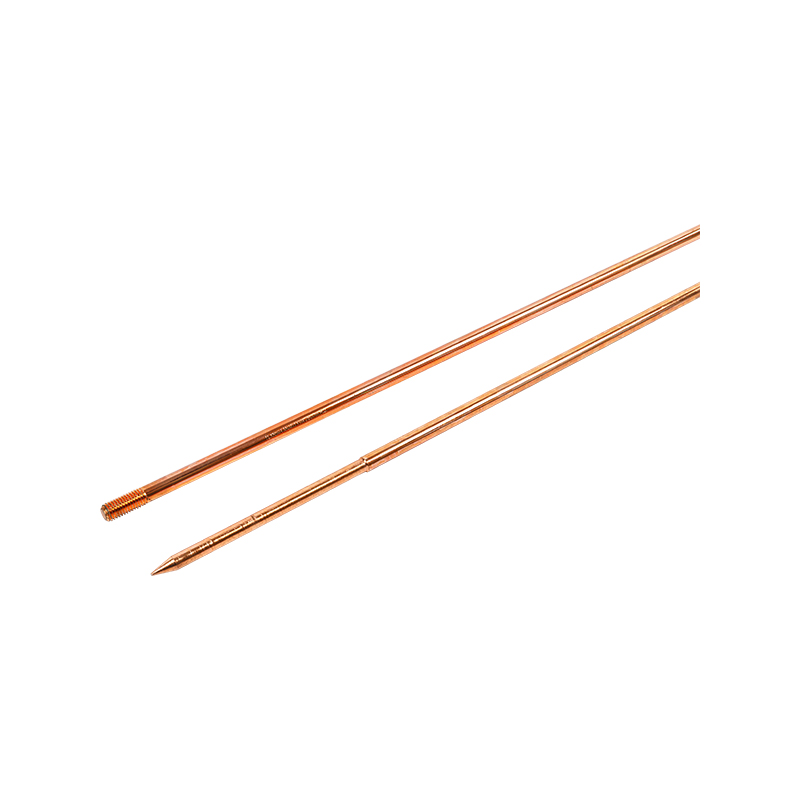
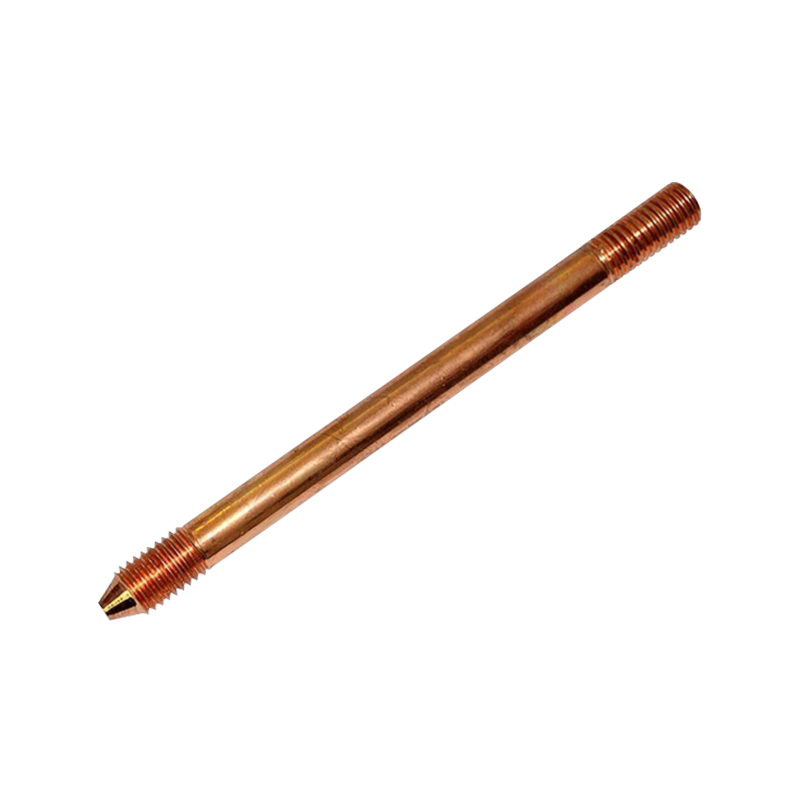
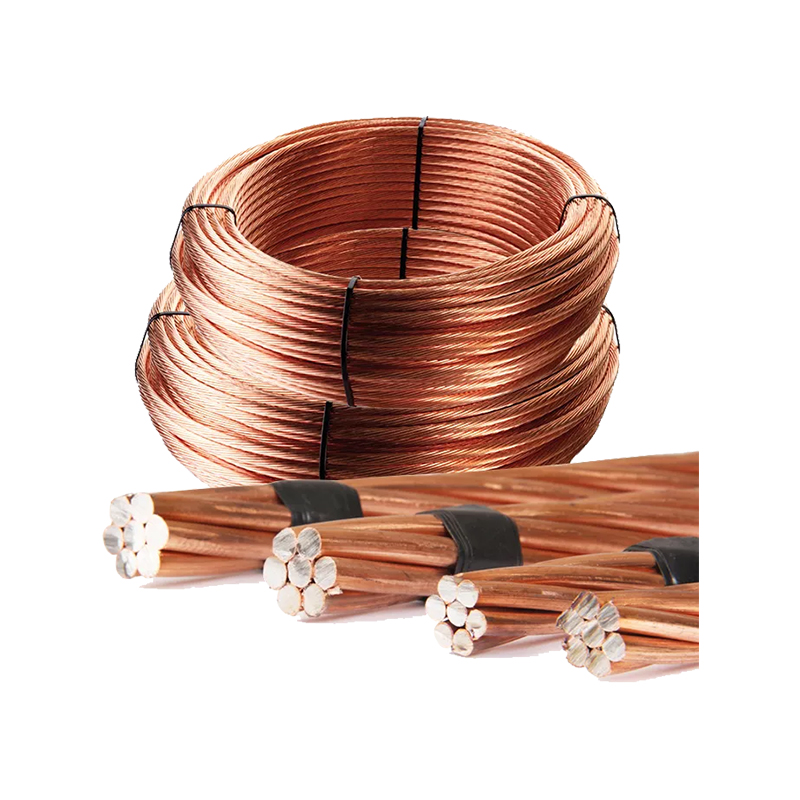
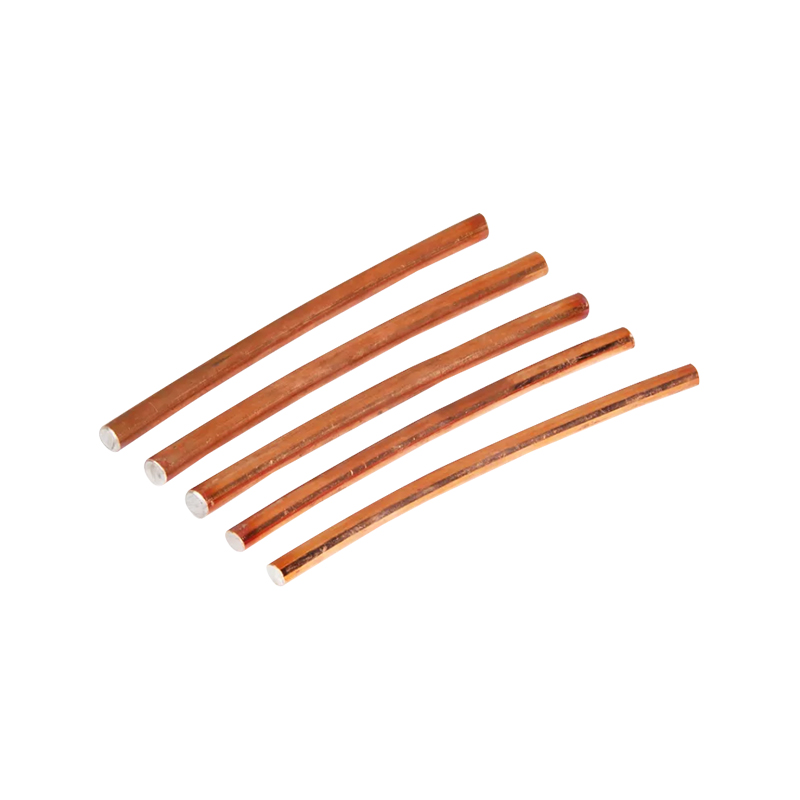
These are the most widely used grounding rods in North America. A high-carbon steel core is molecularly bonded with a layer of copper — typically 0.254 mm (10 mils) thick for standard rods — using an electroplating or extrusion process. The steel core provides tensile strength for driving, while the copper exterior resists corrosion and maintains low contact resistance with the soil. Copper-bonded rods are the standard referenced by UL 467 (Grounding and Bonding Equipment) and meet NEC requirements.
Solid Copper Rods
Solid copper rods offer superior corrosion resistance and conductivity but come at significantly higher material cost and are prone to bending during installation in hard or rocky soils due to copper's relative softness. They are most commonly specified for high-corrosion environments such as coastal installations, chemical plants, and areas with highly acidic soil. In soils with a pH below 5 or in marine environments, solid copper rods can outlast copper-bonded rods by decades.
Galvanized Steel Rods
Hot-dip galvanized steel rods are the most economical option and are permitted by the NEC. However, zinc corrodes significantly faster than copper in most soil conditions, and as the zinc coating degrades, the exposed steel underneath corrodes rapidly. Galvanized steel rods may have an effective service life of only 10–15 years in moderately corrosive soils, compared to 30–40+ years for copper-bonded rods. They are generally recommended only for temporary installations or very dry, non-corrosive soil environments.
Stainless Steel Rods
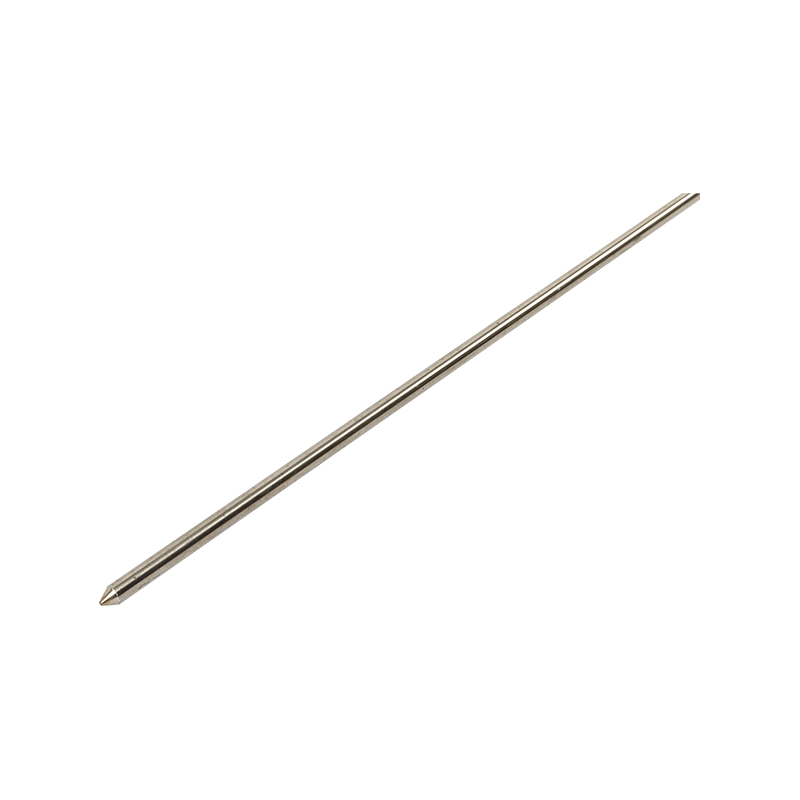
316L stainless steel grounding rods are specified for the most aggressive soil environments, including soils with high chloride content, areas near de-icing salt applications, and industrial sites with chemical contamination. While expensive, they offer exceptional longevity — often exceeding 50 years — with minimal maintenance, making them cost-effective for critical infrastructure over a long service life.
| Material | Typical Service Life | Corrosion Resistance | Relative Cost | Best Application |
|---|---|---|---|---|
| Copper-Bonded Steel | 30–40 years | Good | Moderate | General residential/commercial |
| Solid Copper | 40–50+ years | Excellent | High | Coastal/acidic soils |
| Galvanized Steel | 10–15 years | Fair | Low | Temporary or dry-soil installs |
| Stainless Steel (316L) | 50+ years | Superior | Very High | Industrial/chemical sites |
Standard Dimensions: Length and Diameter Requirements
The NEC (Article 250.52) specifies minimum dimensions for ground rods used as grounding electrodes. Understanding these requirements ensures code compliance and helps you select the right rod for specific soil conditions.
- Minimum length: 8 feet (2.4 meters) for copper or copper-clad rods; 8 feet for iron or steel rods
- Minimum diameter: 5/8 inch (15.9 mm) for copper-bonded and solid copper rods; 3/4 inch (19 mm) for galvanized steel rods
- Common commercial lengths: 10 feet (3 m) and 20 feet (6 m) rods are widely used in commercial and industrial applications where soil conditions require deeper penetration to reach lower-resistance earth layers
Longer rods consistently achieve lower ground resistance because they reach deeper soil layers that retain moisture more reliably than surface soils. In rocky terrain where a full-depth rod cannot be driven vertically, the NEC permits the rod to be driven at an angle of up to 45 degrees from vertical, or buried horizontally in a trench at least 30 inches deep — provided the full rod length is still in contact with the earth.
For coupling multiple rod sections together to reach deeper depths, threaded couplings are used to join standard 4-foot or 5-foot sections. This sectional approach allows installation in confined vertical spaces while still achieving penetration depths of 20 feet or more.
Step-by-Step Installation: How to Drive a Grounding Rod Correctly
Improper installation is the leading cause of grounding system failures. Bending, shallow depth, and poor clamp connections are the most common errors. The following process reflects NEC requirements and industry best practices.
Selecting the Installation Location
Choose a location as close as practical to the electrical panel or service entrance — ideally within 20 feet — to minimize the length of the grounding electrode conductor and reduce its impedance. Avoid areas with compacted gravel fill, buried concrete, or large tree root systems. Soil that retains moisture — shaded areas, near downspouts, or in low areas — will consistently yield lower resistance readings. Never install a grounding rod within 6 feet of another rod unless they will be bonded together as part of a multiple-electrode system.
Driving the Rod
- Call 811 (in the U.S.) or your regional utility notification service at least two business days before digging or driving rods to identify buried utilities.
- Position the rod vertically at the chosen location. A slight point at the tip (most rods come pre-pointed) aids penetration.
- Use a rotary hammer with a ground rod driving attachment for rods up to 8 feet in typical soils, or a pneumatic or hydraulic driver for longer rods and hard soils. Manual sledgehammer driving is feasible for soft soils but slow and prone to bending the rod top.
- Drive the rod until the top is flush with or just below grade level. The NEC requires the rod to be buried to a depth of at least 8 feet in contact with the earth — the entire rod length must be below grade.
- If the rod hits an obstruction (rock layer) before reaching full depth, do not bend it excessively. Instead, use the angled installation or horizontal burial option permitted by NEC 250.53(G).
- If using sectional rods, attach the first coupling before the first section disappears below grade, thread on the next section, and continue driving.
Attaching the Grounding Electrode Conductor
The connection between the grounding rod and the grounding electrode conductor (GEC) is one of the most failure-prone points in the system. The NEC requires the connection to be made with a listed grounding clamp — never with ordinary pipe clamps, hose clamps, or wire ties. Listed ground rod clamps must be rated for direct burial if the connection point will be below grade.
The GEC must be continuous (no splices) from the grounding rod to the main service panel. Minimum wire sizes per the NEC are determined by the size of the service entrance conductors — typically a No. 6 AWG copper conductor for services up to 200 amperes, and No. 4 AWG or larger for services above 200 amperes. Exothermic (cadweld) connections are preferred over mechanical clamps for permanent installations, as they create a molecular bond that will not loosen over time due to thermal cycling or corrosion.
How Soil Type and Conditions Affect Ground Resistance
Soil resistivity — measured in ohm-meters (Ω·m) — is the single most important environmental variable affecting grounding rod performance. Two identical rods installed in different soils can produce vastly different ground resistance readings.
| Soil Type | Typical Resistivity (Ω·m) | Grounding Difficulty | Common Mitigation |
|---|---|---|---|
| Moist clay / loam | 4–50 | Easy | Standard installation |
| Moist sandy loam | 50–200 | Moderate | Multiple rods or longer rods |
| Dry sand / gravel | 200–1,000 | Difficult | Ground enhancement material (GEM) |
| Bedrock / granite | 1,000–10,000+ | Very Difficult | Horizontal electrode arrays or GEM wells |
| Permafrost | 10,000–100,000+ | Extremely Difficult | Chemical ground electrodes, deep wells |
Ground Enhancement Materials (GEM)
When soil resistivity is too high for standard rods to meet resistance targets, ground enhancement material (GEM) — also called conductive concrete or ground improvement compound — is packed around the rod to create a larger, more conductive electrode zone. GEM products typically consist of carbon-based or bentonite clay compounds that absorb and retain moisture while providing a conductive matrix around the rod. Studies have shown that GEM can reduce ground resistance by 40–70% compared to a bare rod in the same soil, and the improvement remains stable over the lifetime of the installation because GEM does not dry out like plain backfill.
Testing Ground Resistance: Methods and Acceptable Values
Installing a grounding rod without testing it is like installing a fire sprinkler system without verifying water pressure. The rod may be in the ground, but you have no confirmation it will perform when needed. Ground resistance testing should be performed at initial installation and periodically thereafter — annually for critical infrastructure, every 3–5 years for standard commercial installations.
The Fall-of-Potential Method (Three-Point Test)
This is the most accurate and widely used method for testing individual ground rods. It requires a dedicated earth ground resistance tester (a.k.a. megger or fall-of-potential tester), three test leads, and two auxiliary test stakes. The procedure:
- Disconnect the grounding electrode conductor from the rod (or the main bonding jumper from the system) so the rod is isolated.
- Drive a current electrode (C2) stake approximately 100 feet (30 m) from the ground rod being tested.
- Drive a potential electrode (P2) stake at 62% of the distance between the ground rod and the current electrode — approximately 62 feet (19 m) from the rod.
- Connect the tester leads to all three electrodes and run the test. The instrument injects a known AC current and measures the resulting voltage drop to calculate resistance.
- Record the reading. A result of 25 ohms or less meets the NEC standard; values below 5 ohms are required for sensitive electronic and telecommunications applications.
The Clamp-On Test Method
For systems with multiple ground rods already bonded together, the clamp-on (or stakeless) method allows testing without disconnecting the system. A clamp-on ground resistance tester is clamped around the grounding conductor at any single rod. It induces a voltage and measures the resulting loop resistance. This method is faster and less disruptive but measures the parallel combination of all rods in the bonded system, not individual rod resistance. It is best used for ongoing maintenance verification rather than initial commissioning tests.
Multiple Ground Rods: When One Is Not Enough
The NEC requires a second ground rod when a single rod tests above 25 ohms. But for many applications, a two-rod minimum is just the starting point. Understanding how multiple rods behave in parallel helps in designing an effective grounding system.
When two rods are connected in parallel, their combined resistance is lower than either rod alone — but not simply half. The benefit diminishes as rods are placed closer together because their resistance zones overlap. The optimal spacing between rods is at least equal to their length — so for 8-foot rods, a minimum 8-foot spacing is recommended; for 20-foot rods, 20-foot spacing. Rods spaced less than their own length apart show rapidly diminishing returns.
For a practical example: two 8-foot copper-bonded rods in moist loam soil, each measuring 15 ohms individually and spaced 8 feet apart, will typically combine to approximately 9–10 ohms — not 7.5 ohms as a simple parallel calculation would suggest, because of the overlapping soil influence zones. Spacing them 15–20 feet apart would push the combined value closer to 8 ohms.
For installations requiring very low resistance — such as data centers (1–5 ohms), broadcast towers (1 ohm or less), or medical facilities — ground rod arrays with 4, 6, or more rods arranged in a line or ring configuration are standard practice.
Grounding Rods for Lightning Protection Systems
Grounding rods serve a dual function in structures equipped with lightning protection systems (LPS): they provide the earth termination point for direct lightning current, as well as the equipment grounding path for the electrical system. These two functions have different requirements that must be carefully reconciled.
The National Fire Protection Association standard NFPA 780, and the international standard IEC 62305, both address lightning protection grounding. Key requirements differ from standard electrical grounding:
- Multiple earth termination electrodes are required, spaced around the perimeter of the structure to distribute the lightning current into the earth through multiple parallel paths.
- NFPA 780 requires a minimum of two ground rods per down conductor for Type I structures, with rod spacing determined by the grounding resistance target.
- Bonding between the lightning protection ground and the electrical system ground is mandatory to prevent dangerous potential differences during a strike. Separate, unbonded ground systems create step and touch voltage hazards.
- Ring ground electrodes — a continuous bare copper conductor buried around the structure's perimeter and bonded to vertical ground rods — are recommended for large structures and are standard for telecommunication towers and substations.
A lightning event can deliver peak currents of 30,000 to 200,000 amperes in microseconds. The grounding system must handle this impulse without the electrode-to-soil interface arcing over — a phenomenon that can fracture soil and physically eject rods from the ground if the system is undersized.
Common Grounding Rod Mistakes and How to Avoid Them
Even experienced electricians encounter grounding system failures that trace back to avoidable installation errors. The following are the most frequently documented problems found during inspection and testing:
- Rod not driven to full depth: Leaving part of the rod above grade or not achieving the full 8-foot burial depth significantly increases resistance. Always confirm full depth before backfilling.
- Using non-listed clamps: Pipe clamps, hose clamps, and improvised connectors corrode and loosen. Only UL-listed grounding clamps rated for the conductor size and burial conditions should be used.
- Splicing the grounding electrode conductor: The NEC prohibits splices in the GEC between the electrode and the service panel. A spliced GEC creates a high-impedance point that degrades fault current performance.
- Dissimilar metal connections without protection: Connecting aluminum conductors directly to copper rods creates a galvanic corrosion cell. Use listed bimetallic connectors or restrict connections to the same metal family.
- Assuming a passing test is permanent: Soil conditions change seasonally. A rod measuring 18 ohms in spring may exceed 25 ohms in late summer drought. Schedule periodic retesting and consider installing a moisture-retaining GEM backfill for long-term stability.
- Skipping bonding between ground systems: Multiple grounding electrodes for different systems (electrical, lightning protection, telecommunications) that are not bonded together create differential ground potentials that can destroy equipment and create electrocution hazards. All ground systems on the same structure must be bonded at a single point.
NEC Code Requirements at a Glance
For electrical contractors, inspectors, and engineers, the following table summarizes the primary NEC Article 250 requirements applicable to grounding rod electrodes:
| Requirement | NEC Section | Specification |
|---|---|---|
| Minimum rod length | 250.52(A)(5) | 8 ft (2.4 m) |
| Min. diameter – copper/clad | 250.52(A)(5)(b) | 5/8 in (15.9 mm) |
| Min. diameter – steel/iron | 250.52(A)(5)(a) | 3/4 in (19 mm) |
| Single rod resistance threshold | 250.53(A)(2) | 25 ohms (requires 2nd rod if exceeded) |
| Minimum rod spacing | 250.53(B) | 6 ft (1.8 m) between rods |
| GEC wire size (≤200A service) | 250.66 | No. 6 AWG copper minimum |
| Clamp listing requirement | 250.70 | Listed grounding clamps only |
| Angled installation allowance | 250.53(G) | Up to 45° from vertical; or 30 in. deep horizontal trench |
 About Us
 +86-15167536268
 29, Xingmei Avenue, Xinchang, Zhejiang, China