

 English
 简体中文
简体中文
Conductor Selection Guide
For most permanent earthing systems, solid drawn or stranded copper conductors from a manufacturer with proper electrolytic-grade material and certified stranding remain the benchmark for conductivity and corrosion resistance.
Copper-bonded steel conductors win on cost-to-strength ratio for long buried runs and rocky soil, while galvanized steel only makes sense in low-budget, low-corrosivity installations where copper's premium isn't justified.
An earthing conductor sits underground for decades, mostly forgotten until a fault current needs somewhere safe to go — and by then, whatever weakness the material or manufacturing process left behind has already had years to work. Comparing conductor types side by side, rather than just comparing price per meter, is really the only way to judge whether a manufacturer's product will still be doing its job in year twenty.
What Actually Determines Long-Term Conductor Performance
Three factors decide whether an earthing conductor holds up over its service life: base conductivity, corrosion resistance in the specific soil it's buried in, and mechanical strength to survive installation and any ground movement afterward. No single material wins on all three at once, which is exactly why the comparison below matters more than picking whichever option looks cheapest on a quote.
Surface / backfill zone0–0.3m — highest oxygen exposure
Shallow burial zone0.3–0.6m — typical conductor depth
Moisture-retentive zone0.6–1.0m — variable soil resistivity
Deep / rod contact zone1.0m+ — lowest resistivity, highest pressure
Most corrosion problems don't happen at the deepest point of an installation — they concentrate in the shallow zone where oxygen, moisture, and soil chemistry all interact most actively, which is one reason conductor coating and material choice near the surface deserves as much attention as the conductor buried further down.
Copper Versus Copper-Bonded Steel Conductors
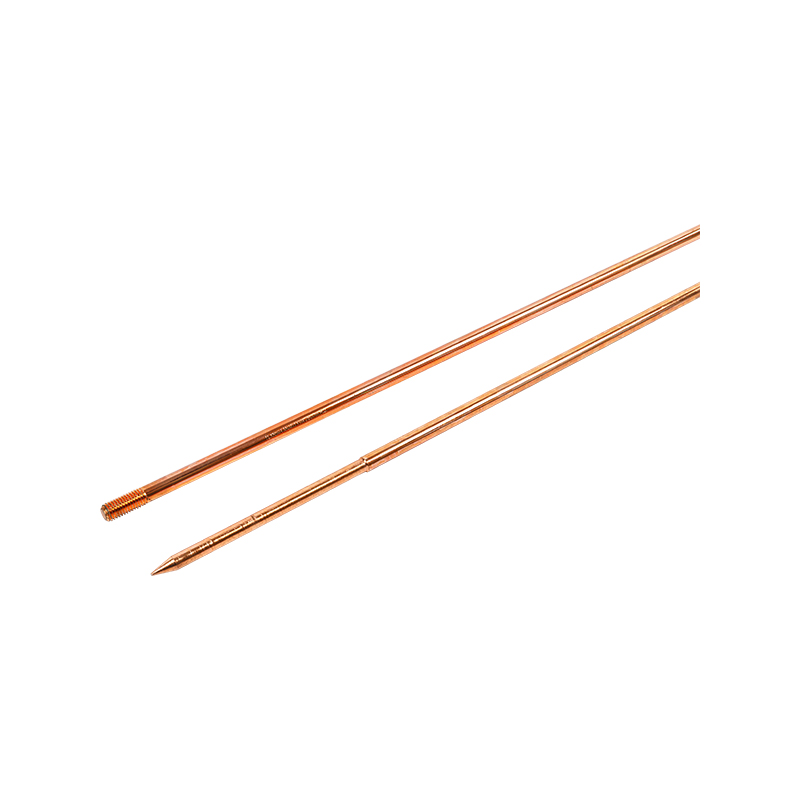
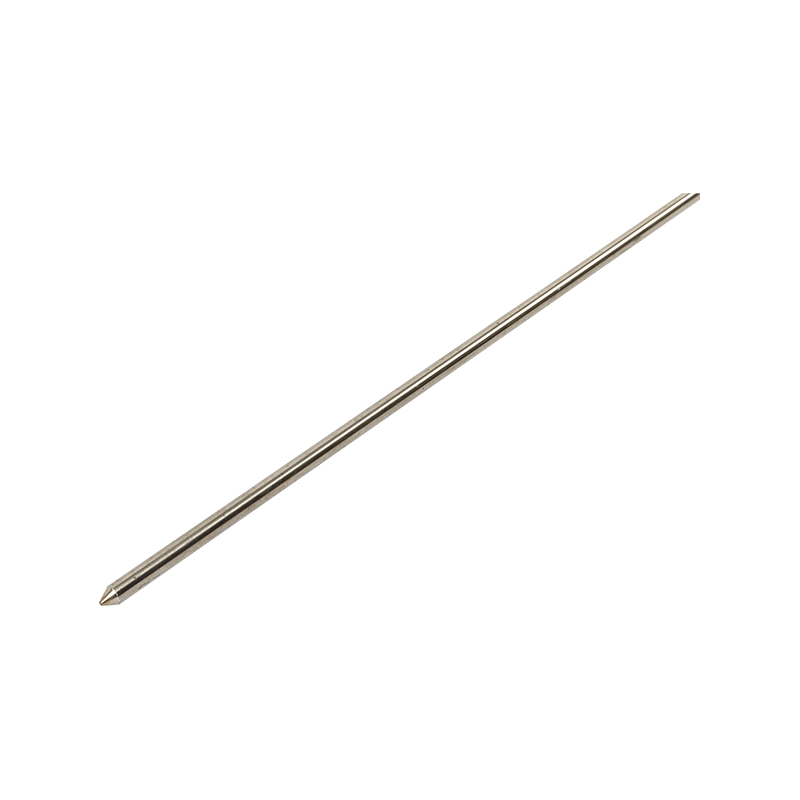
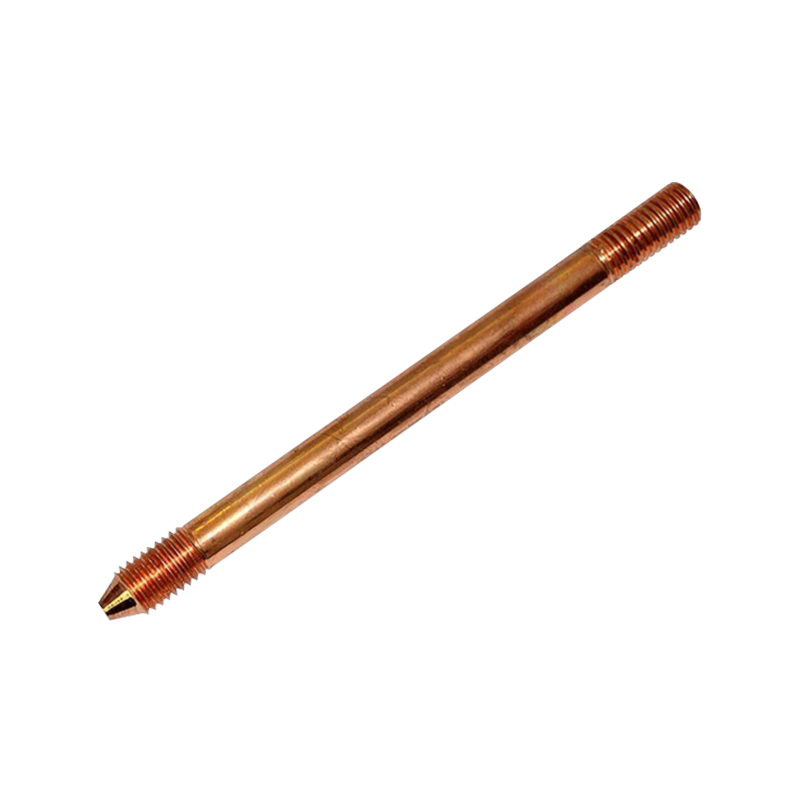
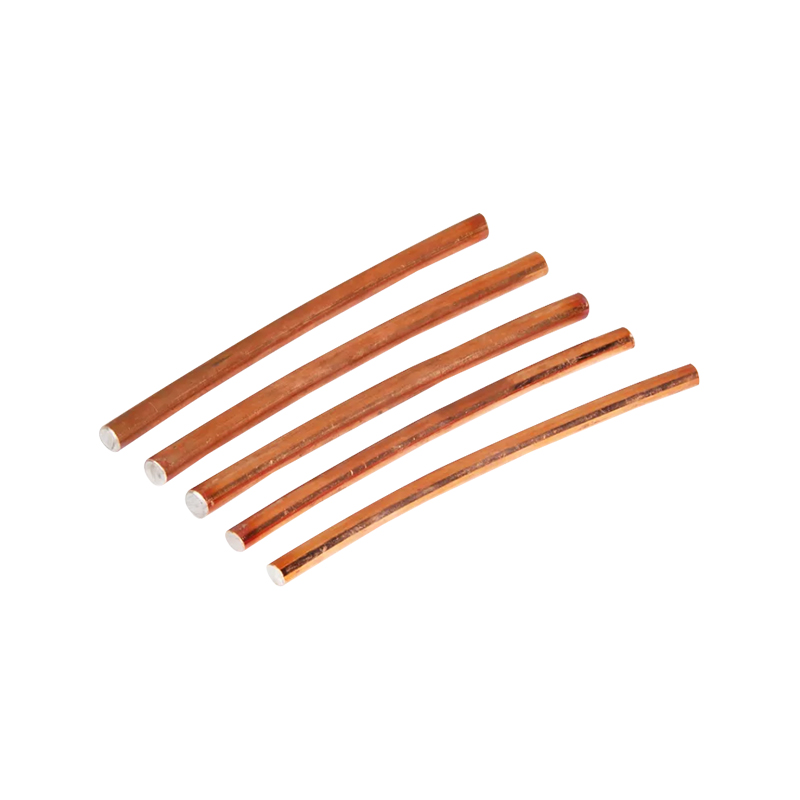
Pure copper conductors offer the highest conductivity of any commonly used earthing material and resist corrosion extremely well in most soil types, which is why they remain the default recommendation for critical earthing systems — substations, data centers, and industrial plants where fault current capacity and long-term reliability outweigh material cost. Copper-bonded steel takes a steel core and metallurgically bonds a copper layer around it, trading some conductivity for significantly higher tensile strength and lower material cost.
- Conductivity: Solid copper carries higher fault current per cross-sectional area than copper-bonded steel, since the steel core itself contributes little to conductivity even though the copper skin carries most of the current due to the skin effect at fault frequencies.
- Mechanical strength: Copper-bonded steel resists bending and driving stress far better than solid copper, which matters most for ground rods driven into rocky or compacted soil where a solid copper rod would be more prone to bending or deforming.
- Cost per meter: Copper-bonded steel typically costs less than equivalent-diameter solid copper, since only a thin copper layer — commonly in the range of 250 microns or more depending on the standard applied — is needed to provide corrosion protection and current-carrying capacity at the surface.
Copper-bonded steel ground rods are frequently specified with a minimum copper coating thickness because the bond has to survive driving into hard or rocky ground without cracking or peeling — a poorly bonded coating can flake during installation and expose the steel core to direct soil contact, defeating the corrosion protection almost immediately.
Solid Drawn Versus Stranded Conductor Manufacturing
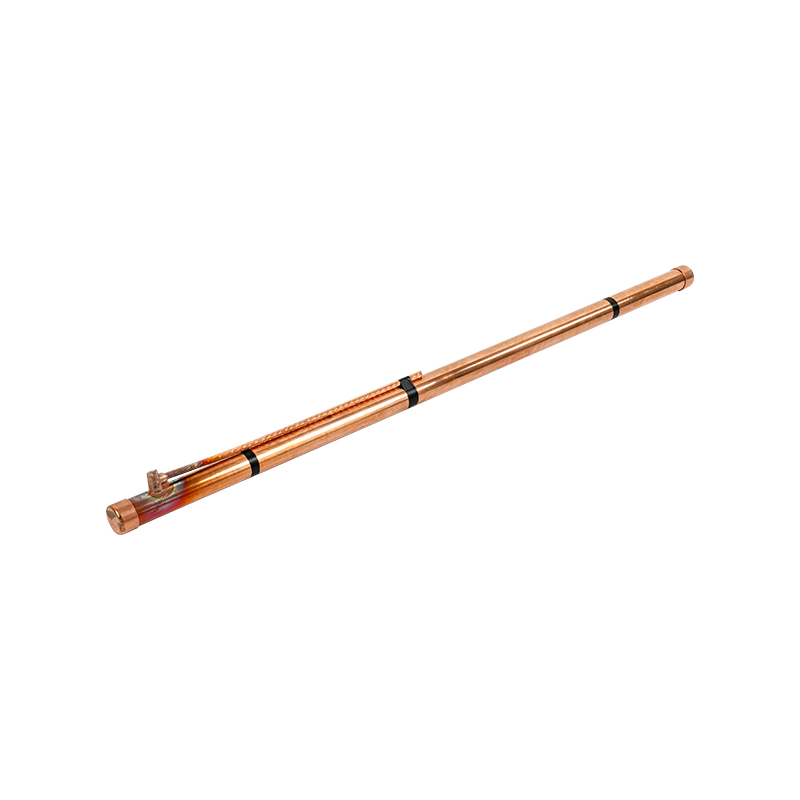
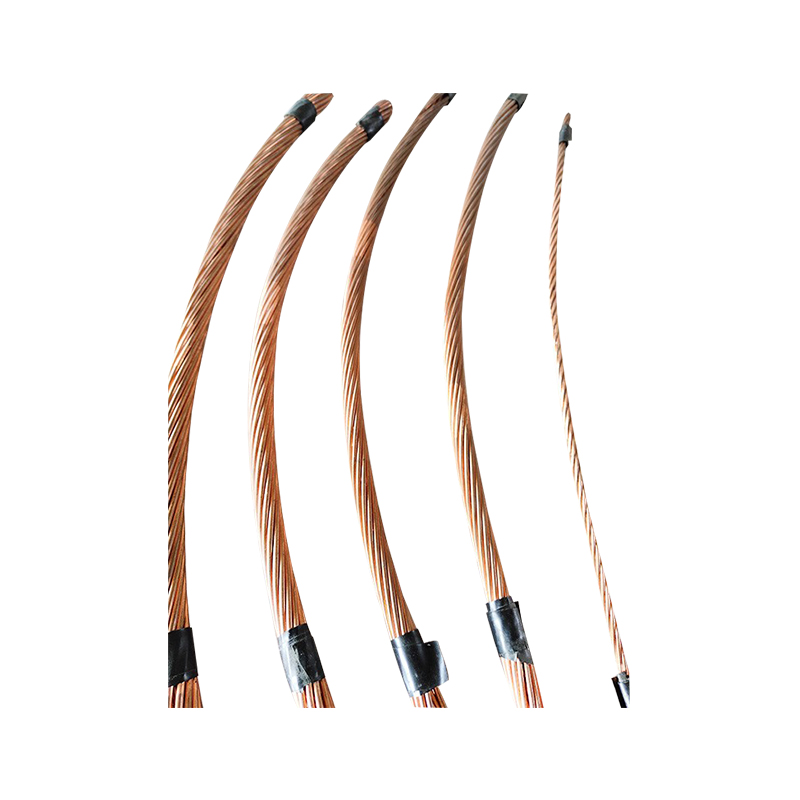
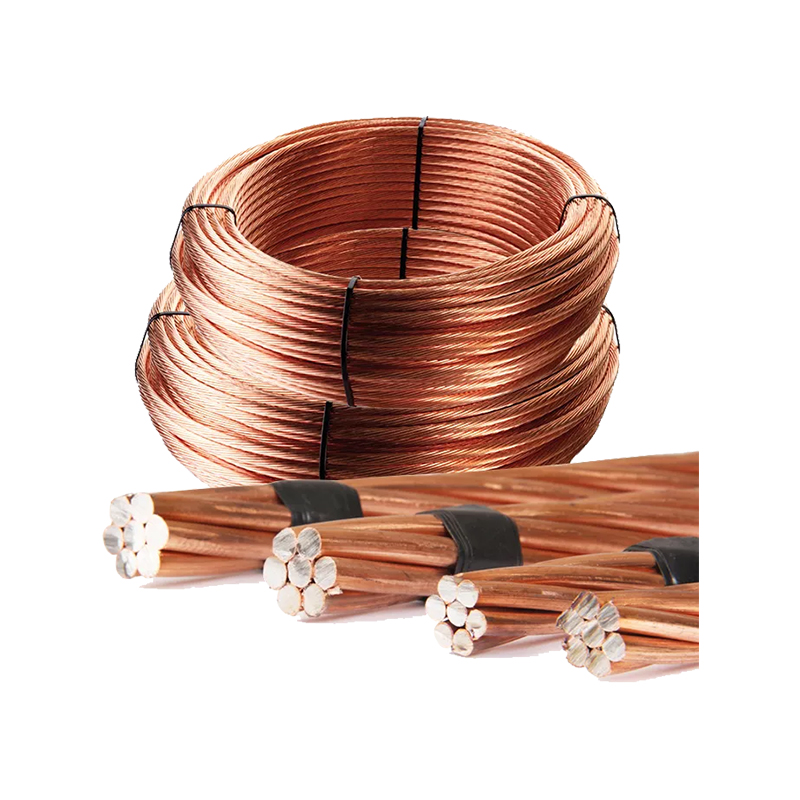
How a manufacturer forms the conductor itself changes its flexibility, surface area, and installation behavior. Solid drawn conductors are pulled through a die as a single continuous rod or tape, giving a rigid, high-strength profile well suited to fixed installation and rod driving. Stranded conductors are built from multiple smaller wires twisted together, giving flexibility that makes routing around obstacles and connecting to equipment terminals considerably easier.
| Attribute | Solid Drawn | Stranded |
| Flexibility | Low, rigid | High, easy routing |
| Surface area per cross-section | Lower | Higher (more strand surfaces) |
| Typical application | Ground rods, tape earthing | Bonding jumpers, cable connections |
| Corrosion exposure pattern | Single continuous surface | More surface area, more monitoring points |
| Installation labor | Straightforward for straight runs | Easier around bends and equipment |
Stranded conductors carry a subtle trade-off worth flagging: their higher total surface area means more exposed metal in contact with soil, which can matter in highly corrosive ground where fewer, larger-diameter contact surfaces sometimes hold up better than many thin strands over very long service periods.
Galvanized Steel Versus Copper for Budget-Constrained Installations
Galvanized steel conductors trade the most on upfront cost, running considerably cheaper than either copper or copper-bonded steel, but the zinc coating that provides corrosion protection is sacrificial — it corrodes preferentially to protect the steel underneath, which means the protection has a finite lifespan that depends heavily on local soil aggressiveness.
Galvanized Steel
Lowest upfront cost, reasonable performance in low-corrosivity, well-drained soil, but a shorter realistic service life in acidic, saline, or highly conductive soils where the zinc layer depletes faster.
Copper / Copper-Bonded
Higher upfront cost, but corrosion resistance that isn't dependent on a sacrificial coating being consumed over time, making it the more predictable long-term choice for critical or hard-to-access installations.
For a temporary installation or a site with known low soil corrosivity, galvanized steel can be a reasonable cost-saving choice. For any earthing system that's expensive or disruptive to dig up and inspect later, the higher upfront cost of copper or copper-bonded steel is usually the more defensible long-term decision.
How Bonding Process Quality Separates Manufacturers
Not every copper-bonded steel conductor is bonded the same way, and this is where manufacturer comparison matters most directly. Electroplated coatings apply copper through an electrochemical process that can leave a thinner, less mechanically robust layer, while molecularly bonded processes fuse the copper layer to the steel core at a level that resists peeling and cracking far better under bending or driving stress.
- Coating adhesion test: A properly bonded conductor should withstand bending around a specified radius without the copper layer cracking or separating — a test worth requesting documentation for rather than taking on faith.
- Coating thickness verification: Manufacturers should be able to provide measured coating thickness data, not just a nominal spec, since actual thickness can vary along the length of a poorly controlled production run.
- Corrosion testing under load: Salt spray or soil-burial testing results specific to the conductor, rather than generic copper corrosion data, give a more accurate picture of how the finished product will behave.
What to Request Before Comparing Manufacturer Quotes
A conductor price comparison is only meaningful when the underlying specifications match. Requesting documented coating thickness, base material purity, tensile strength ratings, and any available third-party test certificates turns a simple price-per-meter comparison into a real apples-to-apples evaluation — and often reveals that the cheapest quoted option isn't actually specifying the same conductor as its higher-priced competitors.
 About Us
 +86-15167536268
 29, Xingmei Avenue, Xinchang, Zhejiang, China