

 English
 简体中文
简体中文
A contractor wiring a 400 A service for a new industrial building sized the grounding electrode conductor at 3 AWG copper because he used NEC Table 250.122, the same table he relies on for equipment grounding conductors on branch circuits. The engineer caught the error before inspection: for a 400 A service with 600 kcmil copper ungrounded conductors, Table 250.66 requires a 2/0 copper grounding electrode conductor. The 3 AWG would have carried normal current without complaint, but it would not have met the code, leaving the grounding system under-built for the role it has to play. The mix-up is common in the field, and the fix is straightforward: identify which conductor you are sizing before you open a table.
Two Conductors, Two Sizing Tables
The NEC treats two grounding conductors very differently, even though they look similar on a drawing and are often confused on site.
The equipment grounding conductor (EGC) runs with the circuit conductors and provides a low-impedance path back to the source so a ground fault can trip the overcurrent protective device (OCPD). Its size is set by Table 250.122, based on the OCPD rating.
The grounding electrode conductor (GEC) connects the grounding electrode — a ground rod, ground ring, concrete-encased electrode, or plate — to the service equipment. It does not clear faults. It keeps the system at a stable potential relative to earth and gives lightning and surge currents a defined path. Its size is set by Table 250.66, based on the size of the largest ungrounded service-entrance conductor.
| Aspect | EGC — Table 250.122 | GEC — Table 250.66 |
|---|---|---|
| Primary function | Clear ground faults | Bond the system to earth |
| Where it runs | Alongside branch-circuit or feeder conductors | Between the electrode and the service equipment |
| Sizing input | Rating of the overcurrent device | Largest ungrounded conductor size |
| Permitted materials | Copper, aluminum, copper-clad aluminum | Copper, aluminum, copper-clad steel |
Choosing the wrong table produces either an unsafe undersizing or a needlessly expensive oversizing. A two-line check prevents both: what does this conductor do, and which table has the NEC assigned to that function?
EGC Sizing: Start from the Overcurrent Device
For an EGC, the starting point is the overcurrent device, not the load. A 60 A circuit with 6 AWG phase conductors still requires a 10 AWG copper EGC, because Table 250.122 assigns 10 AWG to a 60 A OCPD. If the same circuit is protected at 100 A, the EGC must jump to 8 AWG copper even if the phase conductors stay at 6 AWG. The reason is fault clearing: the EGC must carry the fault current long enough for the OCPD to open, and a larger OCPD allows a higher fault current for a longer time, so the conductor needs more copper.
| OCPD rating (amperes) | Copper EGC (AWG) | Aluminum EGC (AWG) |
|---|---|---|
| 15–20 | 14 | 12 |
| 30 | 10 | 8 |
| 60 | 10 | 8 |
| 100 | 8 | 6 |
| 200 | 6 | 4 |
| 400 | 3 | 1 |
| 600 | 1 | 2/0 |
| 800 | 1/0 | 3/0 |
When phase conductors are paralleled, the EGC is still sized from the OCPD rating; it is not divided between the parallel sets. In multi-conductor cables, each cable must carry its own EGC sized in accordance with 250.122(F)(2). If one EGC serves several circuits in a cable tray, it is sized for the largest OCPD protecting any circuit in that group.
GEC Sizing: Read the Largest Ungrounded Conductor
The GEC is a different animal. Its size follows the cross-sectional area of the largest ungrounded service-entrance conductor, because it must be robust enough to hold the entire service and the electrode system at the same potential during abnormal events, lightning surges, and switching transients. A 200 A residential service with 2/0 copper service conductors takes a 4 AWG copper GEC. Sizing from the breaker instead would produce a 6 AWG copper conductor — a difference that electrical inspectors catch routinely.
| Largest ungrounded conductor or equivalent area | Copper GEC (AWG) |
|---|---|
| 2 AWG or smaller | 8 |
| 1 or 1/0 AWG | 6 |
| 2/0 or 3/0 AWG | 4 |
| 4/0 AWG or 250 kcmil | 2 |
| 300 through 350 kcmil | 1 |
| 400 through 500 kcmil | 1/0 |
| 600 through 750 kcmil | 2/0 |
| 800 through 1000 kcmil | 3/0 |
| Over 1000 kcmil | 3/0 |
Three exceptions keep projects from overspending. A GEC connected to a rod, pipe, or plate electrode never needs to be larger than 6 AWG copper per 250.66(A). A GEC to a concrete-encased electrode is capped at 4 AWG copper per 250.66(B). And the table itself caps at 3/0 copper: no matter how large the service, the GEC is never required to exceed 3/0. Aluminum GECs run one or two trade sizes larger — an 8 AWG copper GEC becomes 6 AWG aluminum, and a 2 AWG copper GEC becomes 1/0 aluminum.
Material Choice: Copper, Copper-Clad Steel, or Aluminum
The code calculation fixes the minimum cross-section; the material decision determines how that cross-section performs in the real environment. Copper is the performance reference. It installs cleanly, terminates reliably, and has a long service record in most soils. Aluminum is lighter and cheaper, but it demands larger sizes, anti-oxidant compound at terminations, rated lugs, and careful torque control. Buried directly, aluminum also needs protection against galvanic corrosion when it touches dissimilar metals or certain soil conditions.
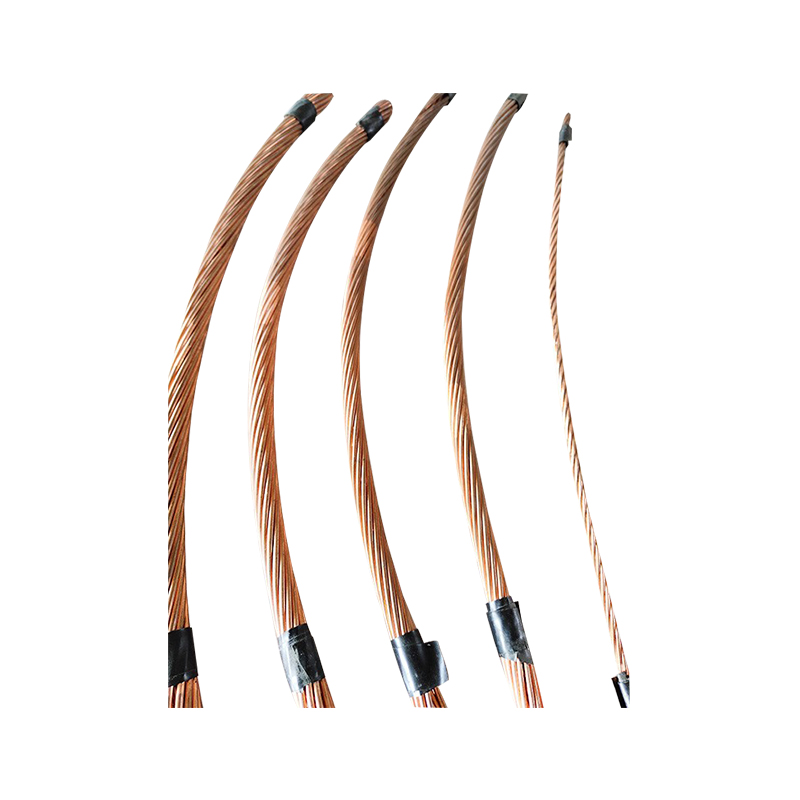
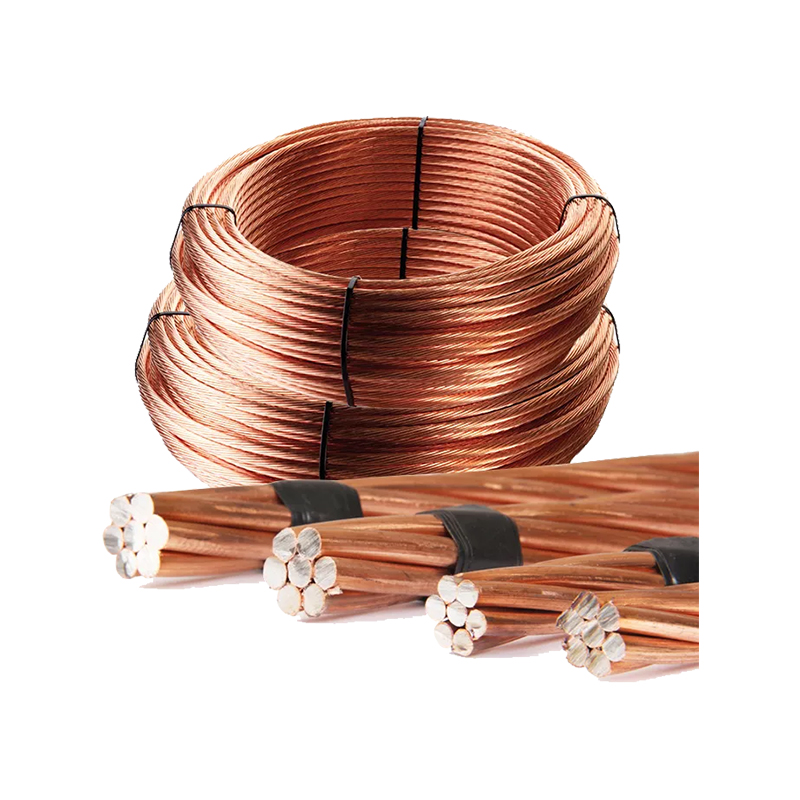
Copper-clad steel (CCS) sits between the two. A high-strength steel core gives it mechanical toughness for long pulls, overhead runs, and grid layouts; the copper cladding provides the surface conductivity that the tables assume. CCS is also less attractive to scrap-metal thieves, a practical advantage on remote industrial and utility sites. When a grounding conductor has to bend through conduit or follow complicated routes, stranded CCS wire offers the flexibility of a rope with the corrosion behavior of copper.
Suppliers that specialize in grounding systems carry the full range of grounding conductors — round wire, stranded wire, flat bar, and tape — so the same AWG or kcmil value can be sourced in the material and form the site requires.
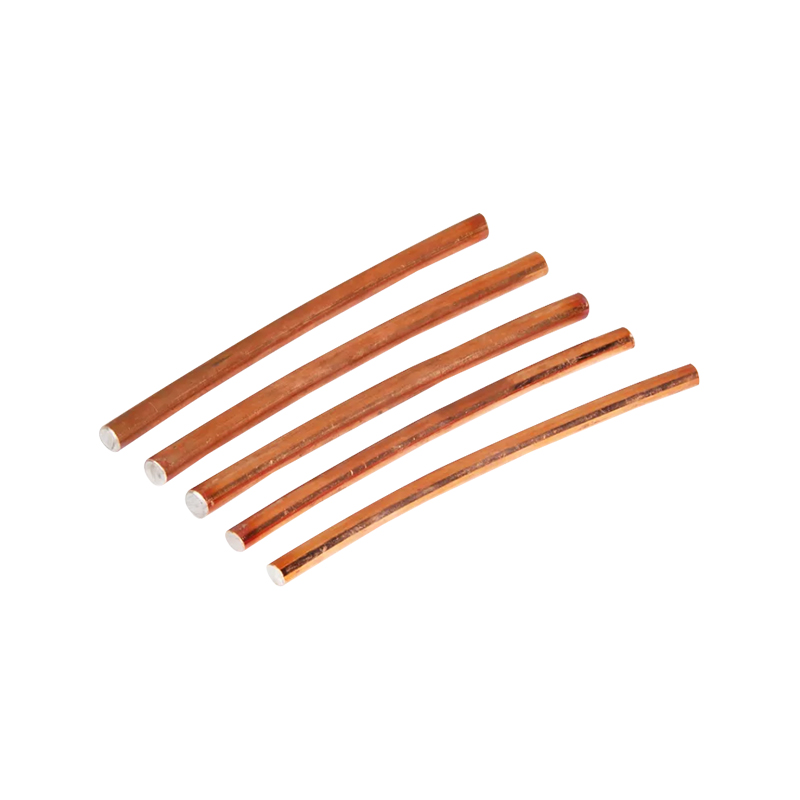
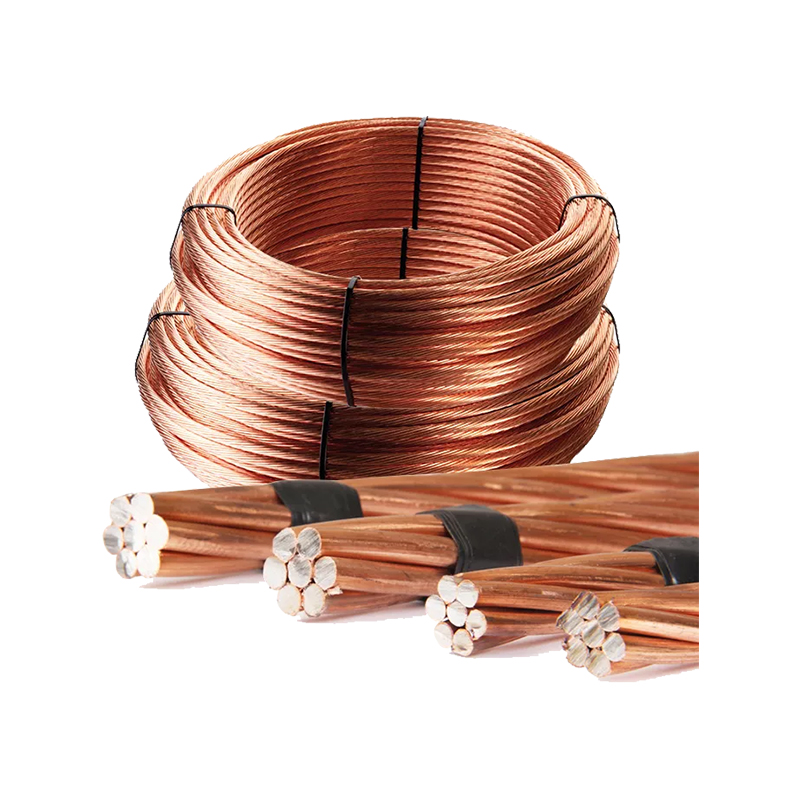 Copper Clad Steel Stranded Wire for Grounding ApplicationsThis flexible stranded wire combines a steel core with a copper cladding, offering high tensile strength and corrosion resistance at lower cost than solid copper, making it a practical choice for grounding grids and vertical risers.View Product →
For vertical risers, bus runs, and grounding grids, flat bar and tape outperform round wire: they support their own weight better, provide a broad clamping surface, and join cleanly with exothermic welding or mechanical connectors. Whatever form is chosen, the delivered cross-section must meet the table value. This is where international procurement gets tricky: a mill certificate stating the cross-section in mm² must be compared directly with the AWG or kcmil requirement on the design.
Five Sizing Mistakes That Show Up at Inspection
Even with the correct table in hand, field errors creep in. The five most common issues we see on industrial and commercial projects are:
- Applying the wrong table. Using Table 250.122 for a GEC, or Table 250.66 for an EGC, produces a conductor that fails inspection. Confirm the function first, then open the table.
- Sizing the EGC from full-load current. A 30 A motor with 10 AWG phase conductors and a 60 A breaker for starting current still needs a 10 AWG copper EGC. Sizing from the motor's full-load current gives 14 AWG, which cannot carry the fault the 60 A device can pass.
- Misapplying the 6 AWG rod-electrode exception. The 6 AWG cap in 250.66(A) applies to a GEC run to a rod, pipe, or plate electrode. It does not reduce the main GEC that connects the service to the grounding electrode system.
- Ignoring aluminum termination requirements. Aluminum grounding conductors need compatible connectors, anti-oxidant compound, and specified torque. Neglecting any of these turns the termination into the long-term weak point.
- Mixing AWG and mm² when ordering. A 6 AWG copper conductor is about 13.3 mm²; 4 AWG is about 21.2 mm²; 2 AWG is about 33.6 mm². If the drawing says 2 AWG, a 25 mm² substitute should not be accepted unless the engineer confirms the equivalent cross-section.
Once the sizing is fixed, the conductor form still deserves attention. Industrial and utility sites often favor flat bar for long, exposed runs because it is simple to support with clamps and easy to weld or bolt. Copper-clad steel flat bar combines the mechanical strength of steel with the electrical behavior of copper, which is why it shows up so often in substation grids and plant grounding loops.
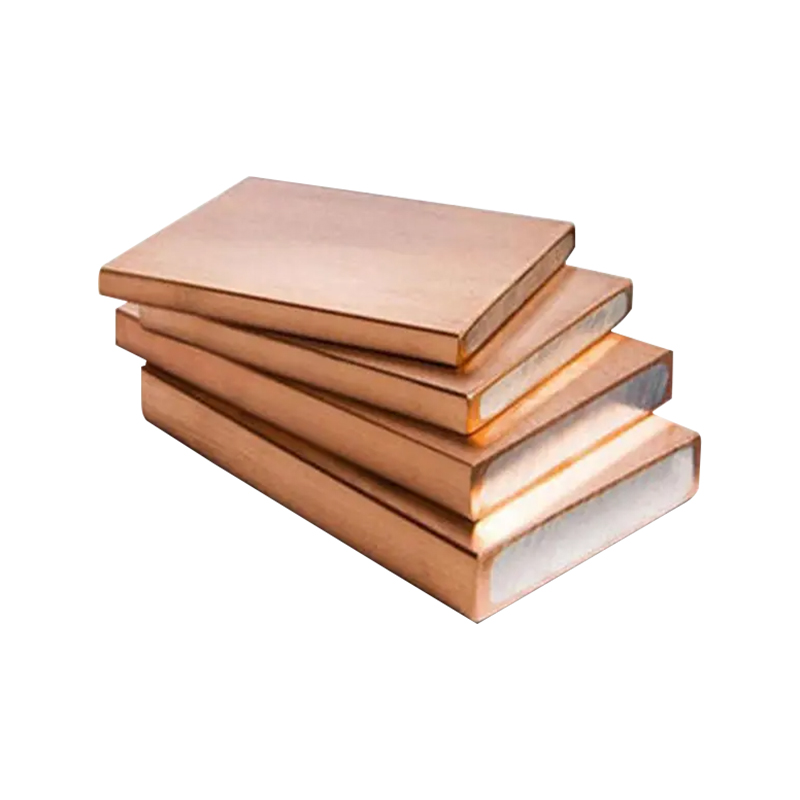
 Copper Clad Steel Flat Bar for Substation Grounding LoopsThis flat bar pairs the mechanical strength of steel with copper's electrical performance, and it supports easy clamping and welding. Its broad surface suits long exposed runs in industrial and utility grounding systems.View Product →
Confirm the Cross-Section Before You Order
The purchase document should record three things: the material, the cross-sectional area in both AWG/kcmil and mm², and the code table that dictated the size. For copper-clad steel products, the thickness of the copper cladding and the overall conductance should appear on the certificate so the inspector can verify the conductor meets the table value. Our comparison of copper, copper-bonded steel, and galvanized earthing conductors explains how each material behaves in buried, concrete-encased, and exposed applications, which helps narrow the choice before ordering.
When the design calls for a solid copper bar — a grounding busbar, a tap point inside the service enclosure, or a GEC that has to be drilled and clamped — the bar cross-section must be true copper, not a coated or plated substitute, if the drawing uses the copper column of the table. Copper bar is also the standard choice when multiple conductors terminate at one point, because it can be drilled, tapped, and labeled without losing the margin required by the code.
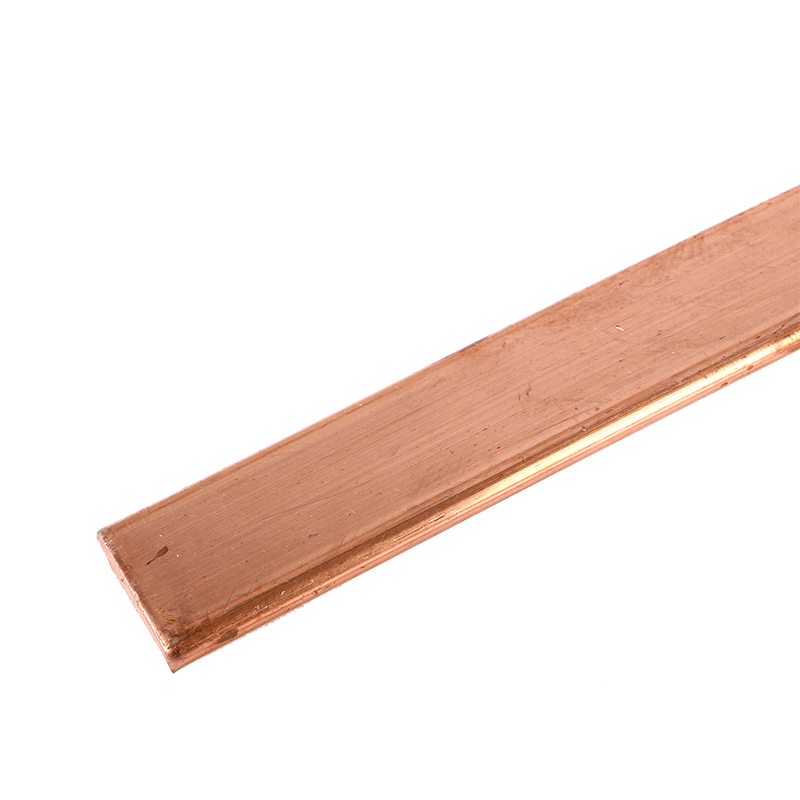 High-Purity Copper Earthing Bar for Termination PointsMade from oxygen-free copper with up to 99.97% purity and low resistivity, this bar is ideal for busbars, tap points, and multiple conductor terminations where true copper cross-section and drillable, clamped connections are required.View Product →
The final check is short. Name the conductor: EGC or GEC. Look up the right table. Match the OCPD rating or the largest ungrounded conductor. Select the material for the environment. Then verify the stated cross-section against the certificate before the material leaves the warehouse. Ground conductor sizing becomes straightforward once the boundary between the two tables is clear — and that boundary is the single distinction that keeps a grounding system safe, compliant, and reasonably priced.
 About Us
 +86-15167536268
 29, Xingmei Avenue, Xinchang, Zhejiang, China