

 English
 简体中文
简体中文
When you upgrade a 100 amp panel to 200 amps, the grounding conductors are not something you should guess at. An electrical inspector will compare the ground wire size for 200 amp service against the service entrance conductors, the grounding electrodes, and the applicable NEC tables. Depending on which part of the system you are wiring, the answer can be 2 AWG, 4 AWG, or 6 AWG. The short version for a typical residential 200 amp service is straightforward: when the service entrance conductor is 2/0 copper, size the grounding electrode conductor (GEC) at 4 AWG copper or 2 AWG aluminum; when the service entrance is 4/0 aluminum, the same GEC sizes apply. If the only electrodes are ground rods, the NEC allows the GEC to be no larger than 6 AWG copper. For the equipment grounding conductor (EGC) in a 200 amp panel, use 6 AWG copper or 4 AWG aluminum. This guide explains the difference between the two conductors, how the table numbers change with conductor material, and which installation details cause inspectors to pause.
One Service, Two Different Grounding Conductors
A 200 amp service panel needs two different grounding-related conductors, but in conversation they are often both called "the ground wire." Mixing them up leads to an undersized or oversized conductor and a failed inspection.
- The grounding electrode conductor connects the service equipment to the earth electrode system: ground rods, underground metal water pipe, concrete-encased electrode, or other approved electrodes. It is sized from NEC Table 250.66, based on the size of the service entrance conductors.
- The equipment grounding conductor connects equipment enclosures, junction boxes, and receptacle grounding terminals back to the service equipment. It is sized from NEC Table 250.122, based on the rating of the overcurrent protective device.
For the same 200 amp service, the GEC is typically 4 AWG copper, while the EGC is typically 6 AWG copper. The two numbers are not interchangeable.
| Conductor | Function | Sizing table | Typical copper size | Typical aluminum size |
|---|---|---|---|---|
| Grounding electrode conductor (GEC) | Connects service equipment to earth electrodes | Table 250.66 (based on service conductors) | 4 AWG* | 2 AWG |
| Equipment grounding conductor (EGC) | Connects equipment enclosures and receptacles to ground | Table 250.122 (based on overcurrent device) | 6 AWG | 4 AWG |
*If the only electrodes are ground rods, NEC 250.66(B) permits the GEC to be no larger than 6 AWG copper. Many local jurisdictions still prefer 4 AWG copper, so confirm the rule with your local building department.
Grounding Electrode Conductor Sizing: NEC Table 250.66 in Practice
Table 250.66 does not list ampere ratings. It lists service or feeder conductor sizes, because the GEC must handle fault currents and lightning transients in proportion to the service conductors. For a 200 amp residential service, the service entrance conductors are normally 2/0 copper or 4/0 aluminum. In those cases, Table 250.66 calls for a 4 AWG copper GEC or a 2 AWG aluminum GEC.
If the service conductors are increased for voltage drop, the GEC must also increase. For example, if an engineer upsizes the service conductors to 250 kcmil copper, the adjusted GEC becomes 2 AWG copper. Do not automatically apply that larger size to every 200 amp job; start with the actual service conductor size and follow the table row.
| Service or feeder conductor (copper) | Service or feeder conductor (aluminum) | GEC (copper) | GEC (aluminum) |
|---|---|---|---|
| 2 AWG | 1/0 AWG | 8 AWG | 6 AWG |
| 1/0 or 2/0 AWG | 2/0 or 3/0 AWG | 6 AWG | 4 AWG |
| 2/0 or 3/0 AWG | 4/0 or 250 kcmil | 4 AWG | 2 AWG |
| 4/0 or 250 kcmil | 250 to 500 kcmil | 2 AWG | 1/0 AWG |
The Ground Rod Exception: When 6 AWG Copper Is Enough
A common forum question asks about "ground wire size for two rods, 200 amp residential." If the grounding electrode system consists only of ground rods, NEC 250.66(B) states that the conductor to the rod or pipe electrode need not be larger than 6 AWG copper or 4 AWG aluminum. That means the strict NEC minimum for a 200 amp service with only ground rods is 6 AWG copper. The exception exists because a rod electrode has a limited contact area with soil, so a larger conductor does little to improve its fault dissipation.
In practice, however, many municipalities ignore the exception and require 4 AWG copper, matching what Table 250.66 would give for a 2/0 copper service conductor. The price difference between 6 AWG and 4 AWG for a short GEC run is small, and the larger conductor removes any doubt during inspection. If you want to avoid a second trip, ask the inspector or check the local amendments before you buy wire.
Equipment Grounding Conductor Sizing: NEC Table 250.122 in Practice
The equipment grounding conductor carries fault current back to the source until the breaker or fuse opens. Its size therefore depends on the overcurrent protective device rating, not the service conductor size. For a panel protected by a 200 amp main breaker, the EGC must be at least 6 AWG copper or 4 AWG aluminum.
This conductor is installed with the branch circuit or feeder conductors, terminating on the ground bus in the panel and on the enclosure grounding terminal at the equipment end. A 6 AWG copper EGC is common for metal conduit systems, metal-clad cable, and separate grounding conductors pulled into PVC conduit.
| Overcurrent device rating (amps) | EGC (copper) | EGC (aluminum or copper-clad aluminum) |
|---|---|---|
| 100 | 8 AWG | 6 AWG |
| 150 | 8 AWG | 6 AWG |
| 200 | 6 AWG | 4 AWG |
| 300 | 4 AWG | 2 AWG |
If you are installing a 200 amp feeder to a detached garage or a subpanel, the EGC between the main panel and the subpanel is sized from Table 250.122 using the feeder overcurrent protection. That still means 6 AWG copper for a 200 amp feeder. The GEC for the subpanel electrode system, when subpanel electrodes are required, is a separate wiring task and again uses Table 250.66.
Grounding Electrode and Conductor Material Selection
Size is only half of the design. Material selection affects both code compliance and long-term performance.
Copper is the safest choice for both the GEC and the EGC. It can be bare or insulated, and it resists corrosion in direct burial applications. Aluminum and copper-clad aluminum must be one AWG size larger for the same ampacity, and aluminum is not suitable for direct burial in most soil conditions. NEC 250.62 allows aluminum for grounding electrode conductors but warns against use where corrosive conditions exist.
Ground Rod Materials: Copper-Clad Steel vs. Pure Copper
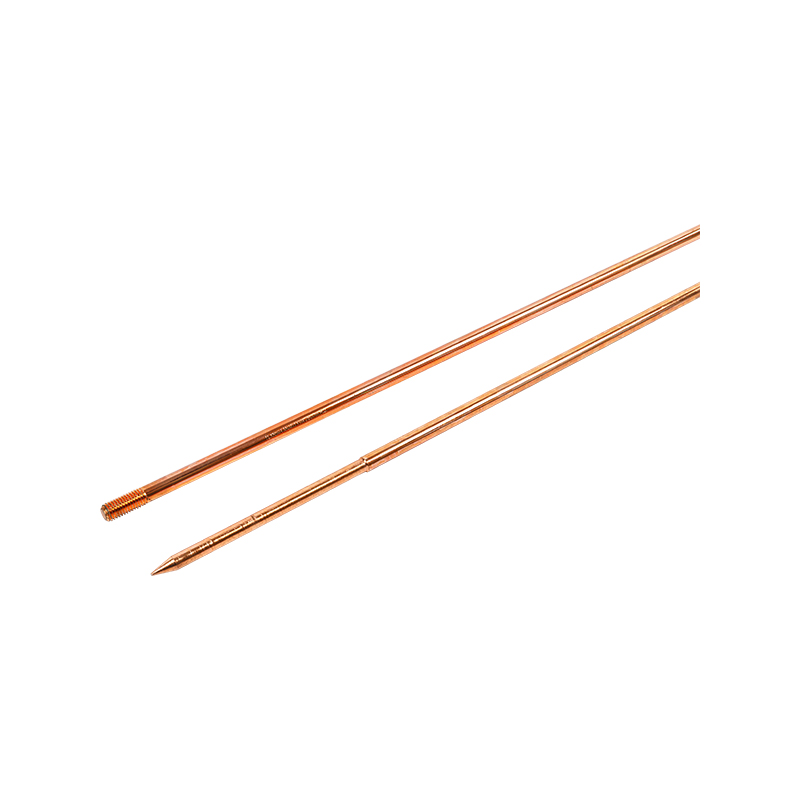
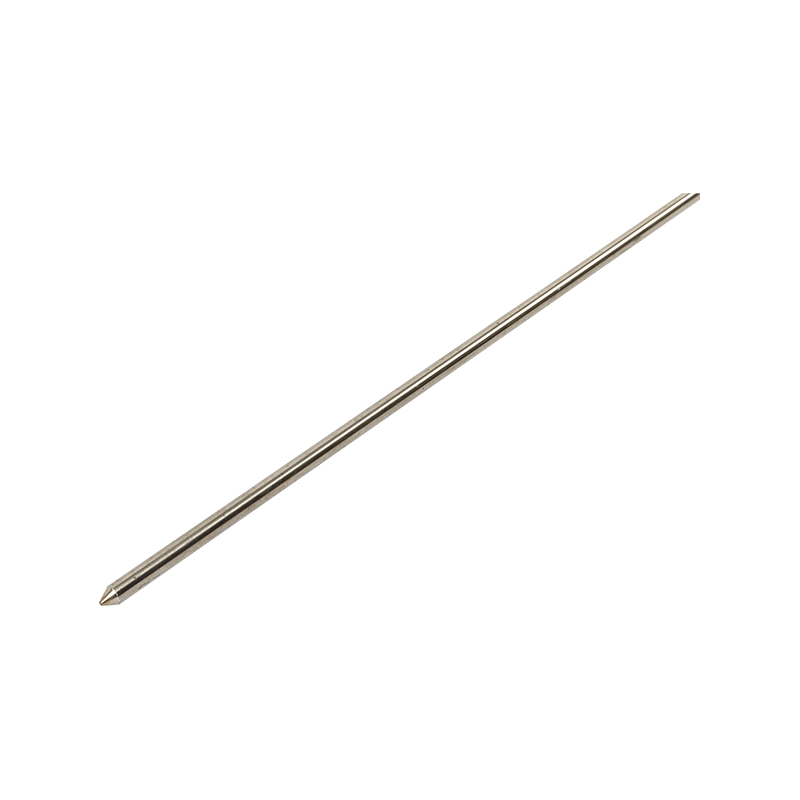
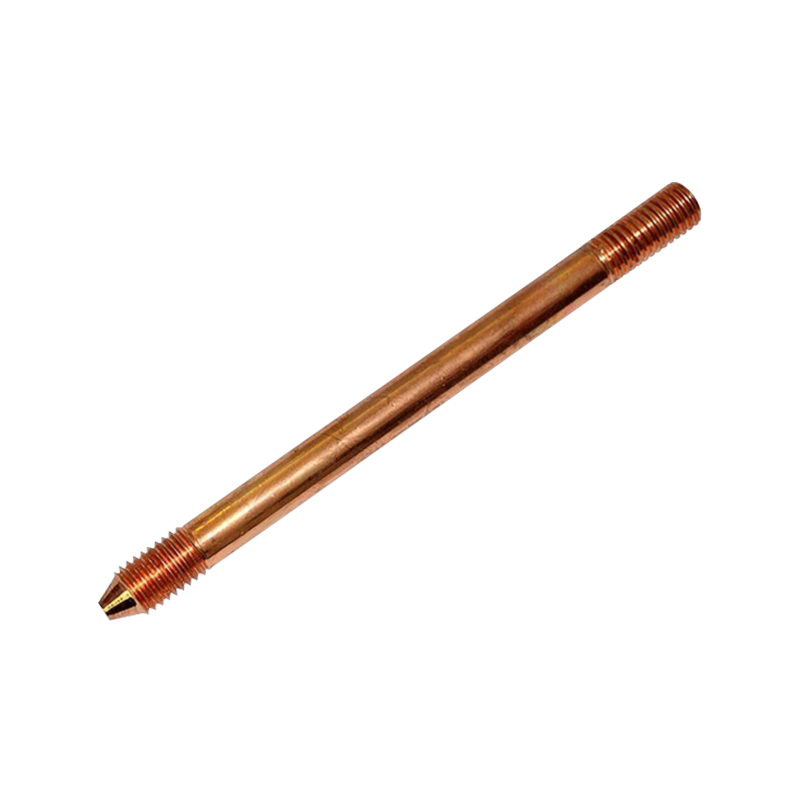
Ground rods are often an afterthought in a 200 amp service upgrade, but they make or break the grounding electrode system from an inspection viewpoint. The standard residential choice is a copper-clad steel rod: the steel core provides driving strength, while the copper layer provides conductivity and corrosion resistance. Pure copper rods are used in high-corrosion soil or where the specification requires a solid copper electrode. Stainless steel rods are sometimes used in industrial environments with aggressive soil chemistry.
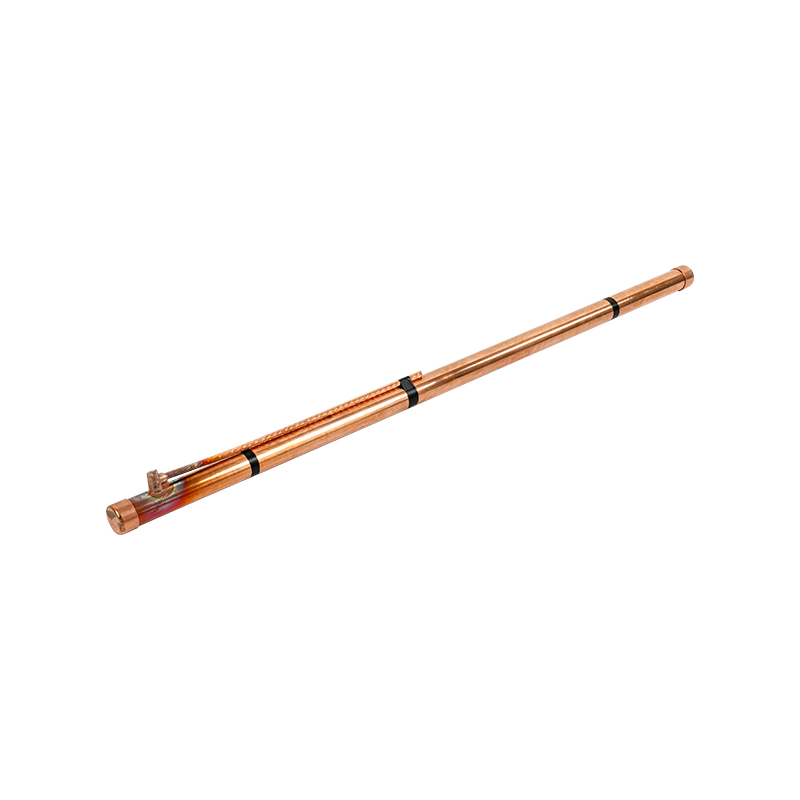
When choosing rods from a supplier, verify the diameter and length, the copper bonding process, and the condition of the surface. A rod with cracks, flaking copper, or an oily surface can fail inspection years later. For most 200 amp residential services, two 8-foot, 5/8-inch copper-clad steel rods spaced at least 6 feet apart provide a practical electrode system. Compare options in our complete grounding rods range.
GEC Conductor Material and Form
The GEC can be a single solid conductor or a stranded conductor. Stranded copper is easier to route through conduit and around bends. For a 200 amp service, 4 AWG stranded copper is the workhorse size: it fits standard lugs and connectors and remains flexible enough for panel terminations.
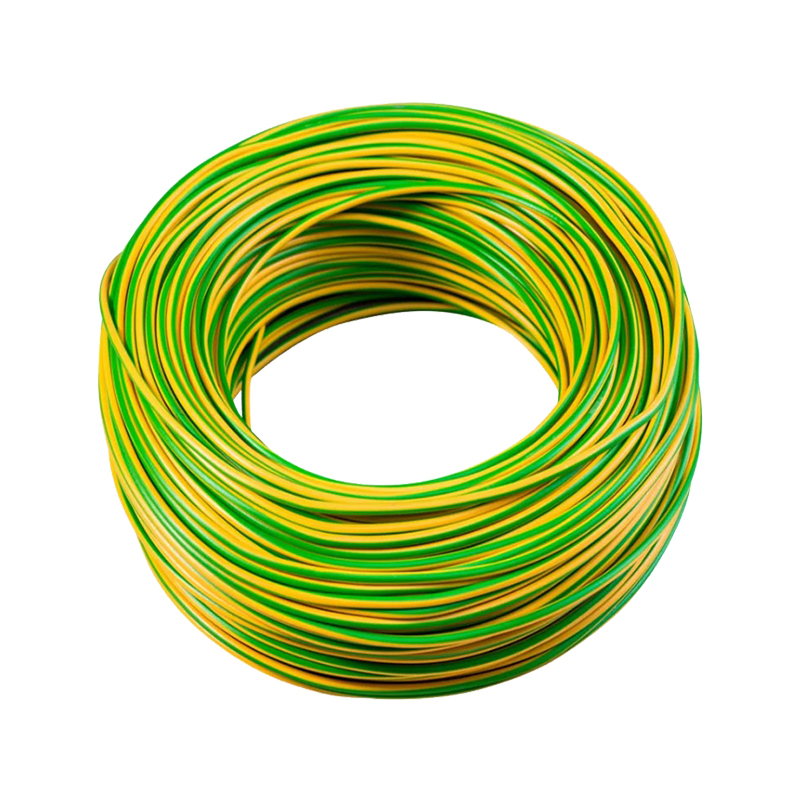
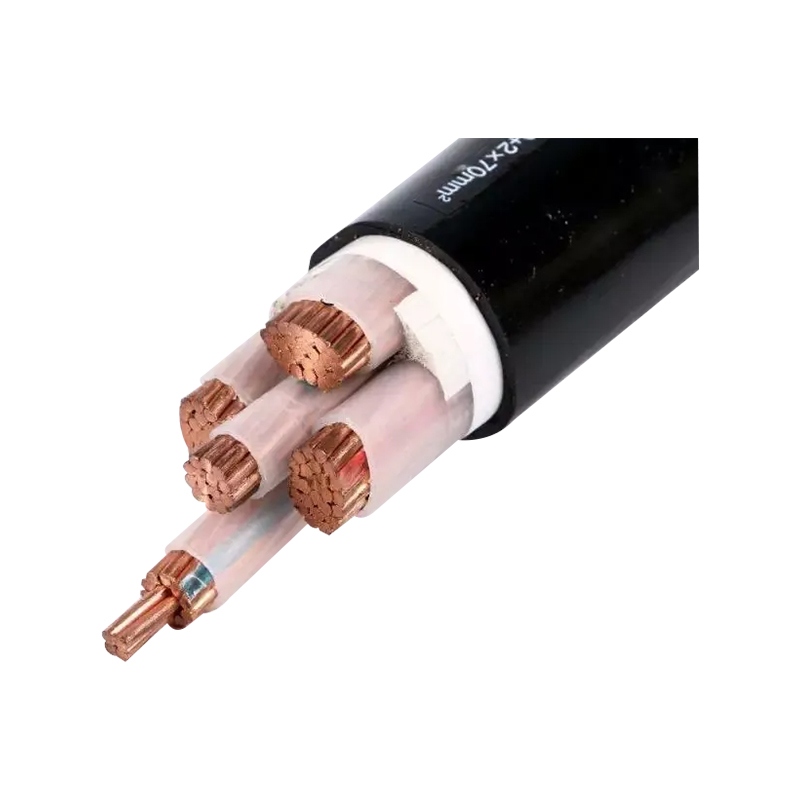
Buying GEC as bare copper is common, but insulated wire is preferable when the run passes through concrete, masonry, or areas where accidental contact with other metal is possible. Insulation also protects the copper from corrosion in damp environments. If your project uses aluminum GEC, verify that the terminations are rated for aluminum and that the conductor is not buried directly in soil. Detailed guidance on conductor options is available in our grounding conductors section.
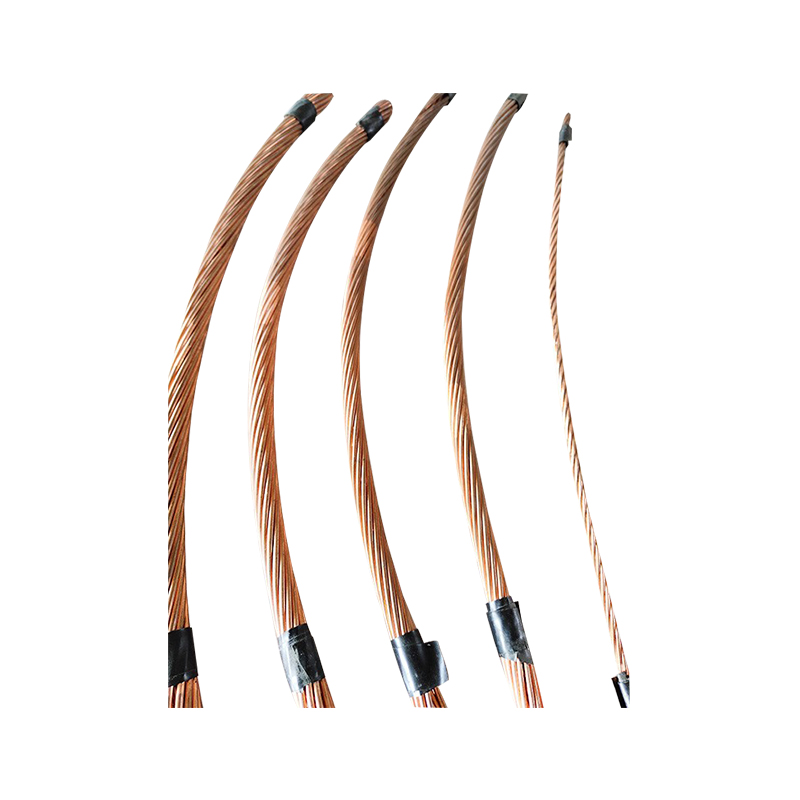
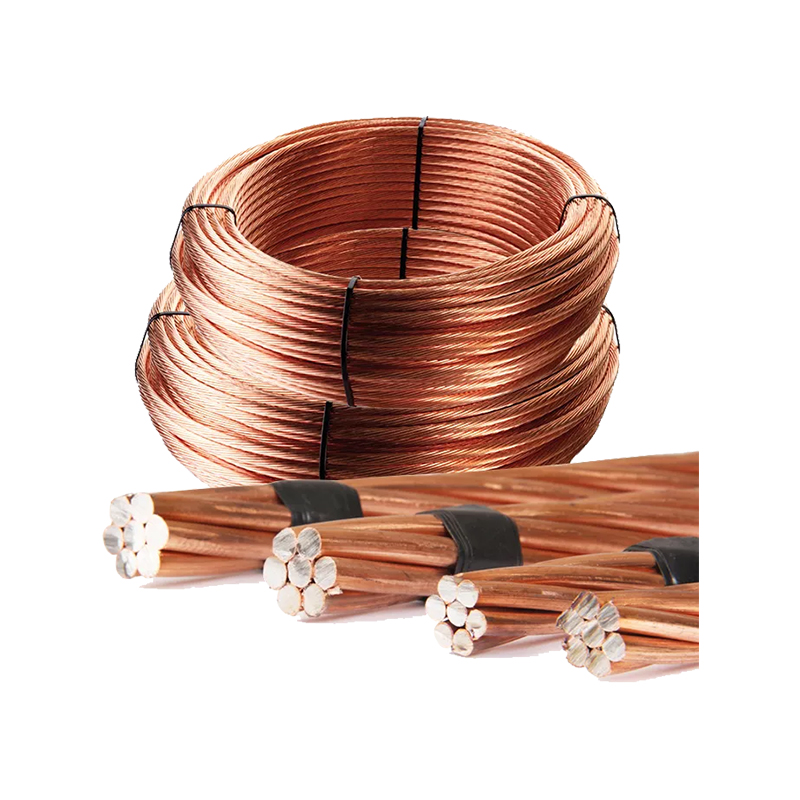
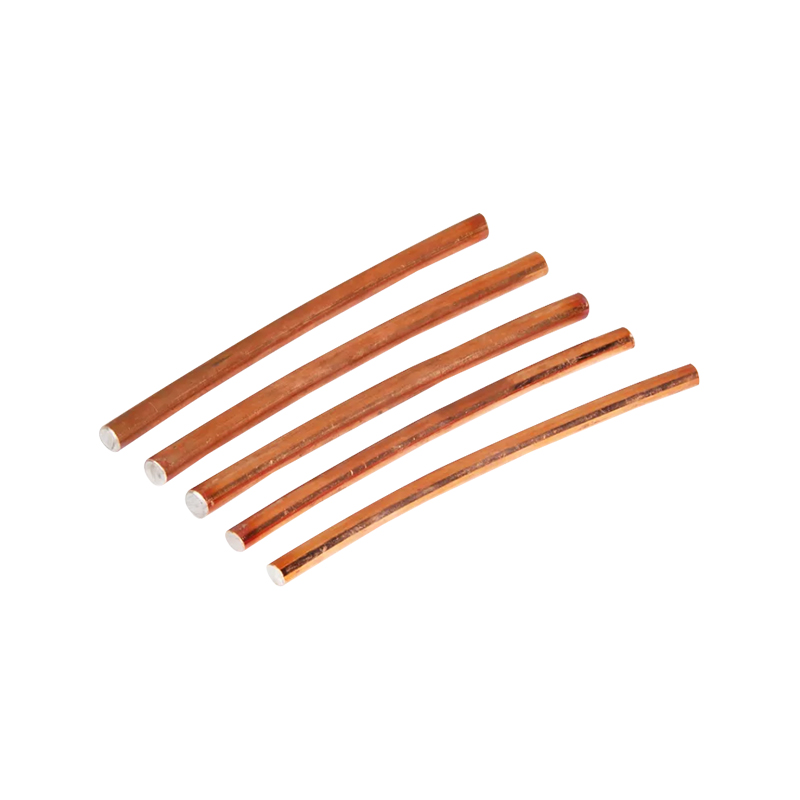
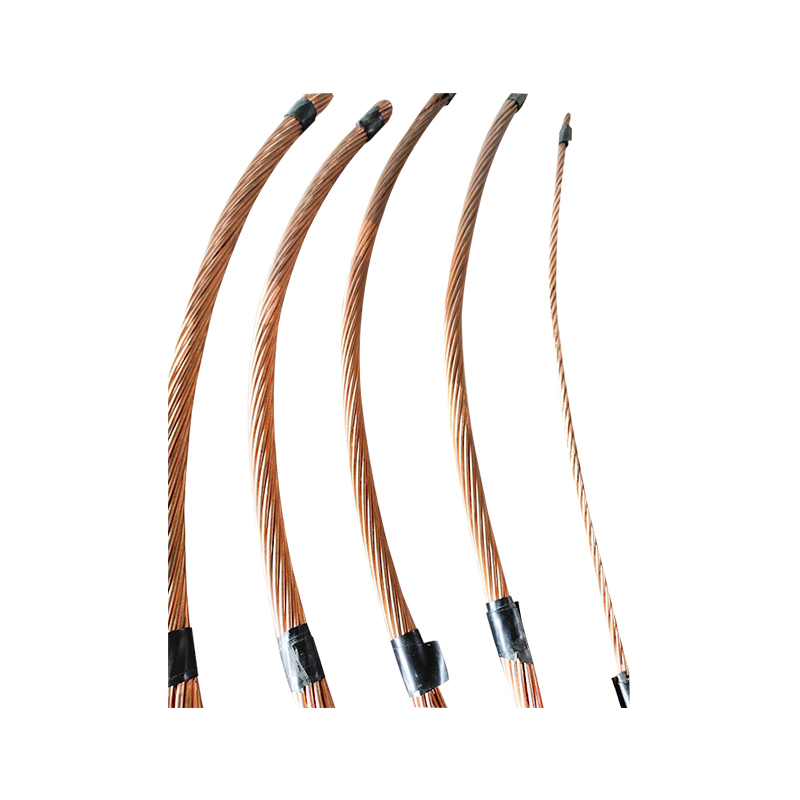 High-Purity Copper Stranded Wire for Earthing SystemsThis bare or insulated stranded copper conductor suits grounding electrode runs, with options for hard-drawn, soft-drawn, or tinned wire. Its high purity supports reliable earth connections.View Product →
Connections, Corrosion Protection, and GEC Routing
An undersized connection is just as dangerous as an undersized wire. The GEC is a continuous copper path from the service disconnect to the electrode system, and that path should not contain splices unless the splice is made with an irreversible compression connector or equivalent. When two ground rods are used, the conductor between them may be spliced using an exothermic weld or a listed connector, but the main GEC run should remain continuous.
For the connection to the ground rod, the usual method is a bronze or copper ground clamp. The clamp must be listed for the rod diameter and the conductor size, and it must be installed so that the connection is not exposed to physical damage. Many jurisdictions require the clamp to be below grade in a covered ground rod inspection well, or at least protected by a listed enclosure.
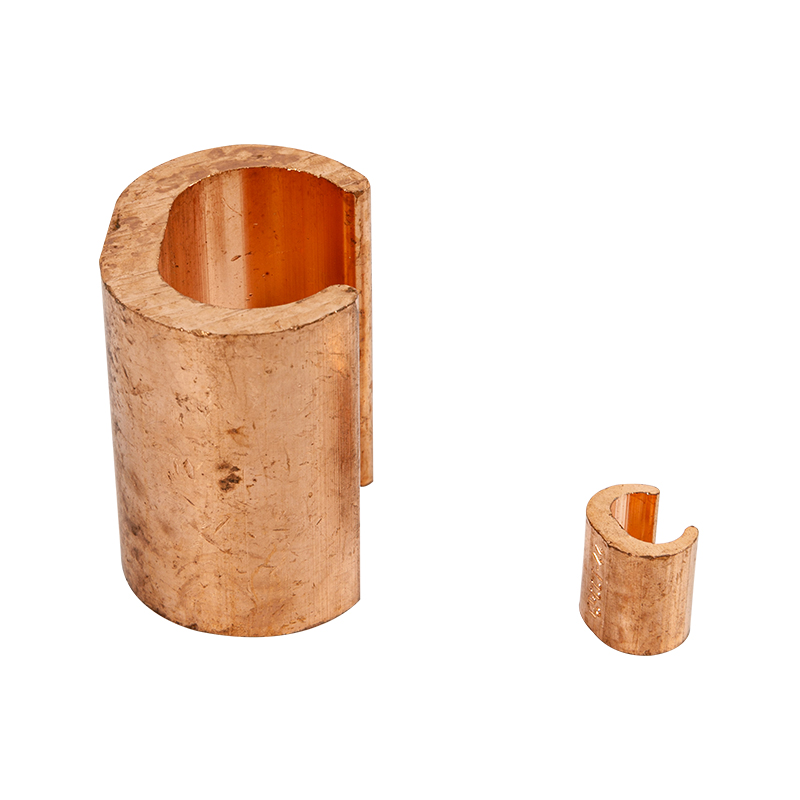 Copper C-Clamp for Ground Rod ConnectionsThis tin-plated or plain copper clamp joins two conductors securely, matching copper or bronze contact needs for grounding rods. It provides firm, low-resistance pressure connections.View Product →
Corrosion protection means using compatible metals. Copper conductors connected to steel rods need a clamp with a copper or bronze contact surface, not a plain steel clamp. The low voltage side is less critical, but the contact area matters for fault currents. A copper C-clamp made for grounding creates a firm pressure connection against the rod, which stands up to thermal cycling better than a simple friction wrap.
| Method | Typical use | Advantages | Watch out for |
|---|---|---|---|
| Exothermic welding | Buried or inaccessible connections | Molecular bond, corrosion-resistant | Requires mold, powder, and operator training |
| Mechanical C-clamp | Rod-to-wire connection at ground rod | Removable and simple to inspect | Must be tightened to torque and checked periodically |
| Irreversible compression connector | Splicing GEC between electrodes | No heat source, fast install | Requires listed tooling and die |
Practical Checklist for a 200 Amp Service Grounding Job
Experienced electricians review the whole grounding path before pulling wire. This checklist prevents the mistakes that show up during the final inspection.
- Verify the actual service entrance conductor size. If it is 2/0 copper, the GEC is 4 AWG copper or 2 AWG aluminum. If it is 4/0 aluminum, the GEC remains 4 AWG copper or 2 AWG aluminum.
- Install all required electrodes. A metal underground water pipe, a concrete-encased electrode, and ground rods may all be present. The GEC size follows Table 250.66 when more than one electrode type is connected, except for the rod exception in 250.66(B).
- Separate the neutral and ground bus at the service disconnect. The main bonding jumper connects them at the service; downstream panels must keep the grounded conductor and grounding conductor separate.
- Route the GEC in a continuous run, protect it from physical damage, and avoid sharp bends that could crack the conductor insulation.
- Use approved connectors for each termination. Apply a corrosion-inhibiting compound where dissimilar metals meet, and leave enough slack at the rod for reconnection if the soil settles.
When buying grounding materials for a project, compare conductor builds and clamp designs. A copper-clad steel ground rod with a thick copper layer and a bronze clamp will outlast a cheaper rod with thin plating and a zinc-plated clamp. For critical facilities, consider adding a grounding inspection well so that the rod-to-wire connection can be checked without digging.
The ground wire size for a 200 amp service is not a single number pulled from one chart. First identify whether you are sizing the grounding electrode conductor or the equipment grounding conductor. Use Table 250.66 for the GEC: normally 4 AWG copper or 2 AWG aluminum, with an exception permitting 6 AWG copper when only ground rods are present. Use Table 250.122 for the EGC: 6 AWG copper or 4 AWG aluminum for a 200 amp breaker. Then select materials that resist corrosion, install continuous conductors with approved clamps, and confirm local amendments before you close up the trench.
 About Us
 +86-15167536268
 29, Xingmei Avenue, Xinchang, Zhejiang, China