

 English
 简体中文
简体中文
Why Ground Rod Material Selection Matters More Than You Think
Every ground rod eventually has to earn its keep underground, where no one can see it and replacing it is expensive. The rod is the physical bridge between your electrical system and the earth, and if it corrodes or loses soil contact, ground resistance rises and protection degrades. That is why material selection is not a small purchasing detail: it determines whether the grounding system stays stable over a 20- to 40-year service life. Engineers who understand how ground rods lower ground resistance also know that corrosion, more than any other factor, is the reason ground rods fail.
The initial price difference between a galvanized ground rod and a copper-bonded ground rod is often modest compared with the cost of digging out and replacing a failed electrode. A rod that performs poorly in the soil can compromise fault current dissipation, lightning protection, and equipment safety. Once the rod is installed, the material’s corrosion resistance is the property that determines long-term performance.
What Is a Galvanized Ground Rod and How Does It Work?
Galvanized ground rods start with a carbon-steel or hot-rolled steel core. The core is cleaned, fluxed, dipped into molten zinc, and cooled, leaving a protective zinc coating. That galvanized steel manufacturing process gives the rod its name and its corrosion protection mechanism. Zinc is more electrochemically active than steel, so it corrodes first and shields the underlying steel. This sacrificial anode behavior works well in many applications, but the protection lasts only as long as the zinc layer remains.
Common hot-dip galvanized ground rods carry a zinc coating in the range of 3.9 mils, or about 0.099 mm. That thickness is a physical result of the dipping process, not a quality shortfall. It is simply difficult to make a substantially thicker zinc coating with hot-dip methods. By contrast, copper-bonded rods often carry a 10-mil copper layer, which is about 2.5 times thicker. For a permanent ground rod, coating thickness is directly related to service life. If you want to compare actual technical parameters, review the galvanized ground rod specifications on the product page.
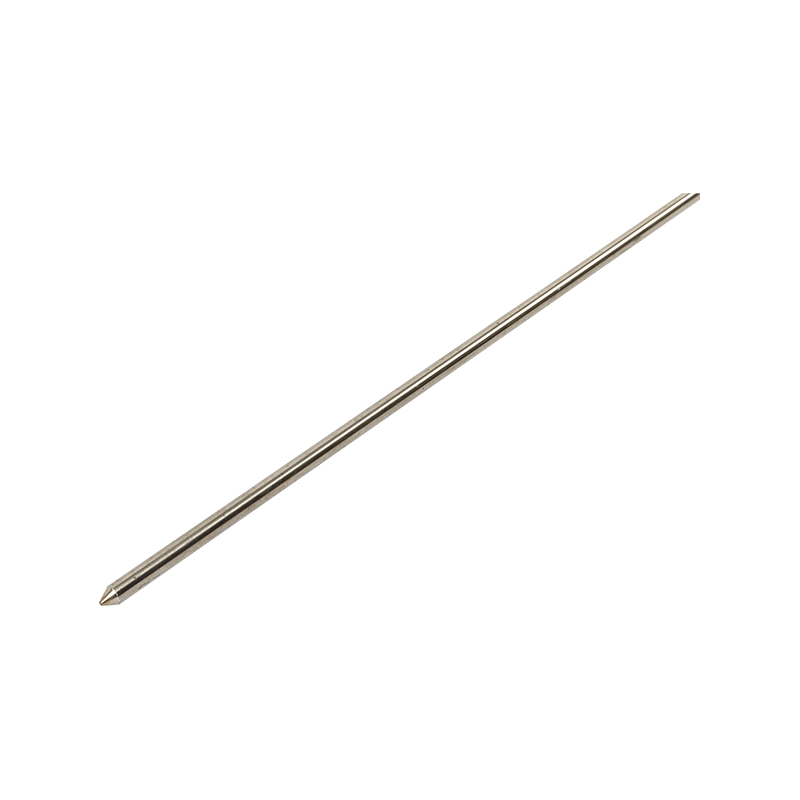
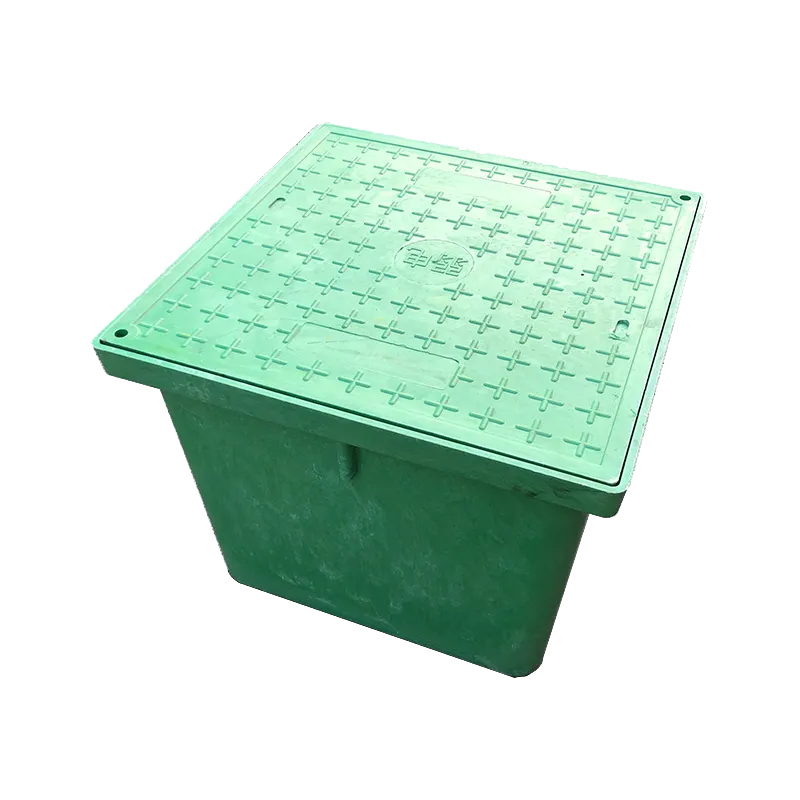 Wholesale Galvanized Grounding Rods Manufacturers, SupplierAs China Galvanized Grounding Rods Manufacturers and Custom Factory, Xinchang TuAn Machinery Co., Ltd. provides types of Galvanized Groun...View Product →
Galvanized vs Copper-Bonded Ground Rods: Head-to-Head Comparison
The differences between galvanized and copper-bonded ground rods show up in three areas: coating thickness, core strength, and long-term cost.
Coating Thickness and Corrosion Resistance
Copper and zinc protect steel in fundamentally different ways. Copper is a noble metal that forms a protective oxide and isolates the steel from the soil. Zinc is a sacrificial coating: it protects the steel only while zinc remains. Once the zinc is consumed, the exposed steel corrodes quickly. Independent corrosion studies support this distinction. Research conducted by the U.S. National Bureau of Standards between 1910 and 1955 found that galvanized steel pipes, after roughly 10 years underground, showed zinc breakdown and pitting of the steel. Copper-bonded samples in the same type of testing averaged only 0.009 inches of total penetration after 13 years. The thickness difference is not academic; it is the difference between an electrode that survives decades and one that degrades much sooner.
Steel Core Strength and Installation Performance
The core of a galvanized ground rod is typically hot-rolled steel with tensile strength around 58,000 psi. Copper-bonded rods commonly use cold-drawn steel with tensile strength above 90,000 psi. That difference matters during installation. A rod driven into rocky or hard soil is more likely to bend if the core is less rigid. A bent rod creates uneven soil contact, which raises contact resistance and reduces the effectiveness of the grounding system. Long-term field testing by the U.S. Navy Civil Engineering Laboratory in the 1960s found galvanized steel rods less reliable in driven applications, and the Navy eventually excluded them from certain systems because of driveability and corrosion performance. In practice, the higher strength of copper-bonded rods is a real installation advantage.
Service Life and Long-Term Cost
The price per rod is only the beginning. A galvanized ground rod may be cheaper at purchase, but if it fails before the project’s expected life, replacement costs can wipe out the savings. Excavation, labor, downtime, and re-testing add up quickly. The National Earth Grounding Research Program, which ran from 1992 to 2002, compared the field performance of grounding electrodes and reinforced what earlier studies found: zinc coatings are consumed faster than copper in most soil environments. That is why copper-plated steel ground rods are essential for installations where replacement is difficult or expensive. UL and NEC requirements focus on performance and corrosion resistance, and many permanent grounding specifications align more naturally with copper-bonded or pure copper electrodes. Galvanized rods still make sense in low-corrosion soil or short-term projects, but for a 20-year permanent installation, the lower initial price often turns out to be the more expensive choice.
| Property | Galvanized Ground Rod | Copper-Bonded Ground Rod |
|---|---|---|
| Core material | Hot-rolled steel | Cold-drawn steel |
| Tensile strength | 58,000+ psi | 90,000+ psi |
| Coating material and thickness | Zinc, roughly 3.9 mils (0.099 mm) | Copper, roughly 10 mils (0.254 mm) |
| Protection mechanism | Sacrificial anode | Barrier/oxide layer |
| Typical use | Temporary, dry, low-corrosion soil | Permanent, aggressive soil, critical infrastructure |
| Service life expectation | Shorter in aggressive soil | Long-term, low-maintenance |
When Should You Use a Galvanized Ground Rod?
This is not a blanket condemnation of galvanized ground rods. They have a legitimate place in electrical grounding, especially where conditions are mild and the installation is not permanent. The key is knowing the boundary between suitable and risky applications.
Suitable scenarios for a galvanized ground rod include:
- Temporary grounding for construction sites, equipment maintenance, and worksite safety.
- Dry, well-drained soils with low chloride levels and near-neutral pH.
- Short-term projects with a planned replacement schedule.
- Non-critical systems where local codes and specifications explicitly allow galvanized steel.
Galvanized ground rods are not the best choice for:
- Highly corrosive soil, including saline, acidic, or industrially contaminated ground.
- Permanent infrastructure such as substations, rail systems, power distribution, and telecom towers.
- Projects that demand 20-plus years of low-maintenance grounding performance.
- Installations that connect galvanized rods directly to copper conductors without proper transition fittings, because the zinc will corrode sacrificially in the bimetallic couple.
If a galvanized rod is used, periodic inspection is especially important because zinc loss is difficult to detect once the rod is buried.
Copper-Bonded Ground Rods: When Long-Term Reliability Wins
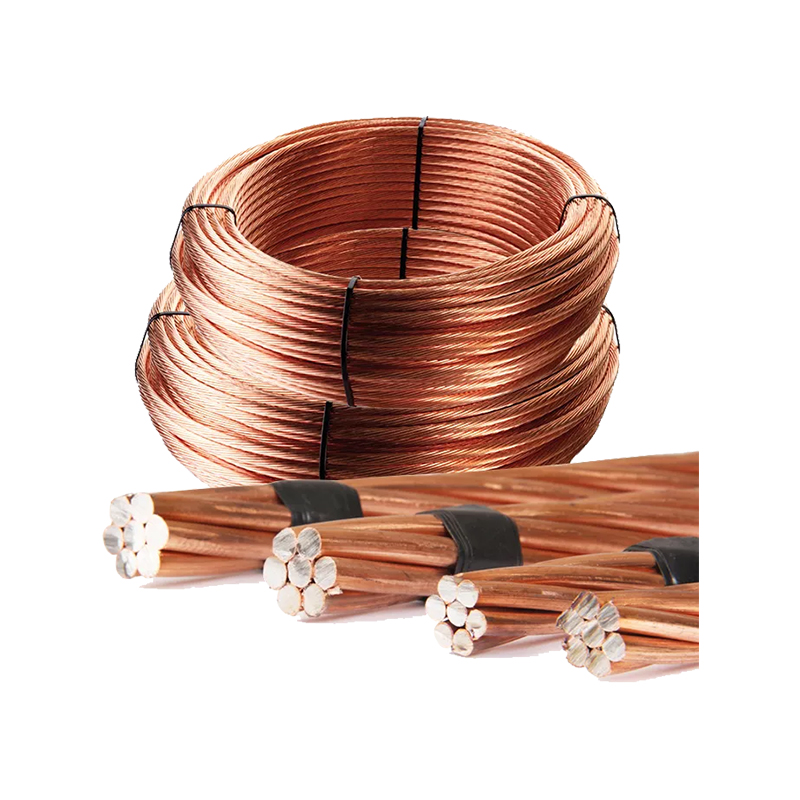
For permanent grounding systems, copper-bonded rods are the industry default for good reasons. The copper layer is more chemically stable in a wider range of soil types, the cold-drawn steel core gives the rod the stiffness needed for clean driving, and the 10-mil coating provides a longer corrosion path. Copper-bonded rods also work well with copper conductors and connectors, which reduces bimetallic corrosion risk. In many projects, the specification process starts with a demand for copper-bonded or copper rods, and galvanized rods are considered only after a specific engineering review. If you are comparing options for a permanent facility, the technical case for copper-bonded rods is strong. To see available configurations, inspect the copper-bonded steel ground rod options.
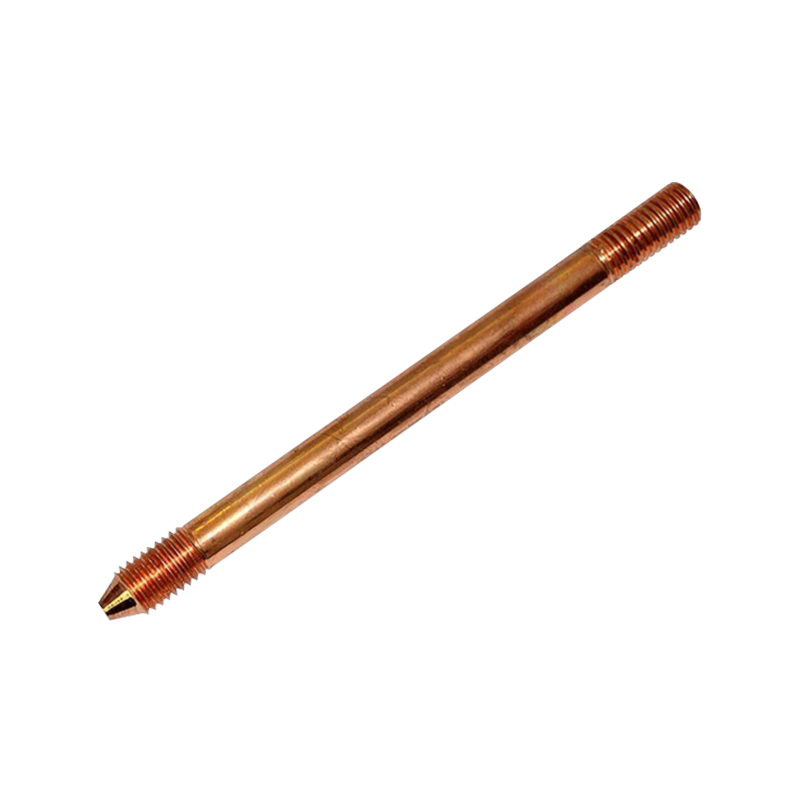
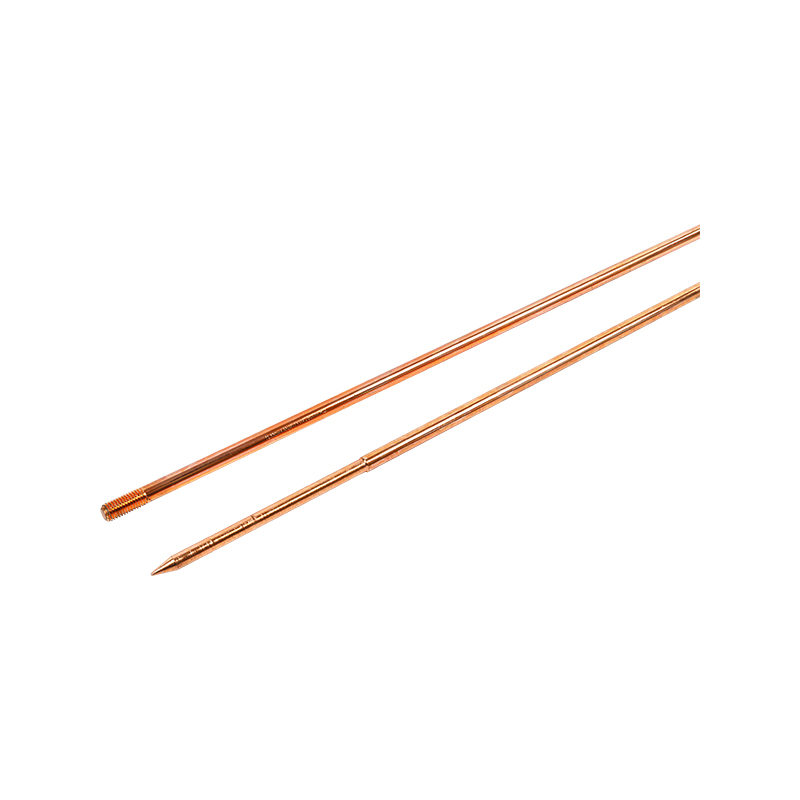 Wholesale Copper Clad Steel Grounding Rod Manufacturers, OEM/ODM Factory - XinchXinchang TuAn Machinery Co., Ltd. is China Wholesale Copper Clad Steel Grounding Rod Manufacturers and OEM/ODM Factory, The copper welded...View Product →
How to Make the Right Choice: A Practical Selection Checklist
Selecting a ground rod is not about picking a material and moving on. It is a decision that combines soil, project life, code, budget, and installation conditions. Use this checklist to evaluate the options.
- Soil corrosivity: test pH, resistivity, chloride, and sulfate levels in the actual backfill.
- Project life expectancy: temporary or permanent? How long before maintenance can occur?
- Compliance and specification: confirm whether the project standard permits galvanized steel or requires copper-bonded.
- Lifecycle cost: compare initial price plus expected replacement cost, not just unit price.
- Installation conditions: rocky soil, driving depth, and equipment availability affect rod strength needs.
- Material compatibility: match rod, conductor, and connector materials to avoid galvanic corrosion.
For a deeper walk-through of these criteria, read our guidance on selecting the right grounding rods. For critical projects where the cost of failure dominates all other factors, pure copper ground rods for critical projects offer the highest level of corrosion resistance and long-term stability. Copper-bonded rods remain a strong middle-ground choice for most permanent installations.
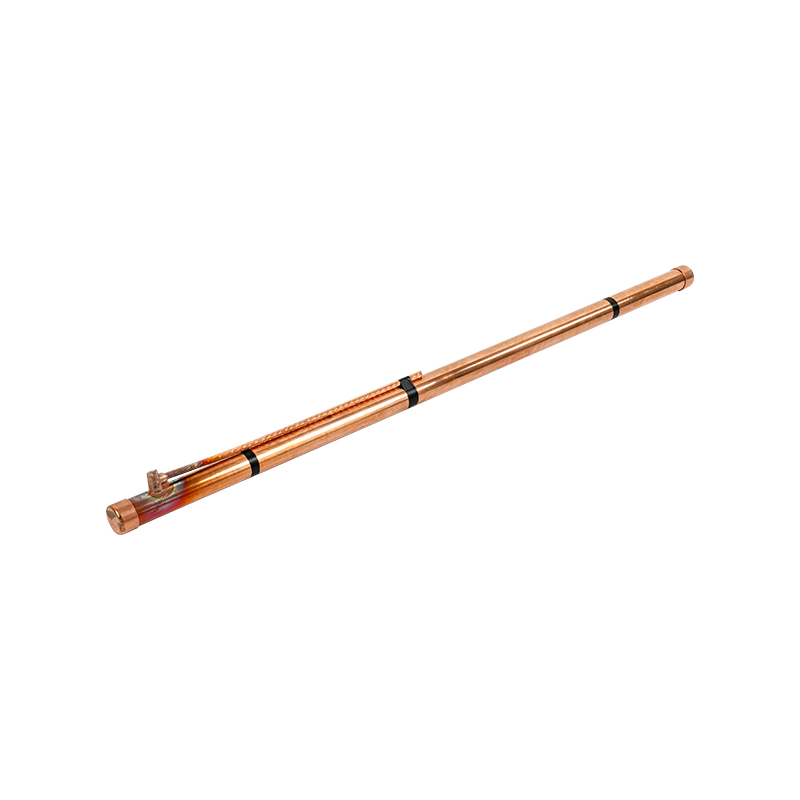
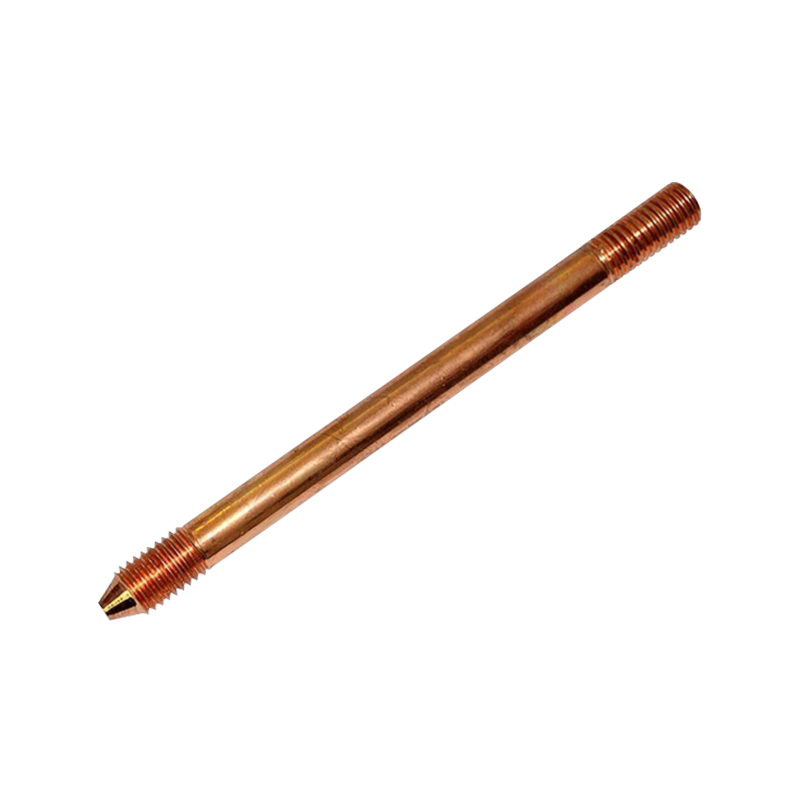 Wholesale Pure Copper Grounding Rod Manufacturers, OEM/ODM Factory - Xinchang TuXinchang TuAn Machinery Co., Ltd. is China Wholesale Pure Copper Grounding Rod Manufacturers and OEM/ODM Factory, Resistivity of copper a...View Product →
Conclusion
Galvanized ground rods are not obsolete, but their role is narrower than many buyers assume. They work best in temporary installations, low-corrosion soil, and cost-sensitive projects where replacement is planned. Copper-bonded ground rods provide more consistent long-term performance in permanent grounding systems because of their thicker copper layer, stronger steel core, and lower bimetallic corrosion risk. The final choice should be driven by soil conditions, expected service life, and code requirements, not by the initial purchase price. Compare the technical specifications against the soil and duty cycle of your specific site before you commit to a grounding electrode material.
 About Us
 +86-15167536268
 29, Xingmei Avenue, Xinchang, Zhejiang, China